
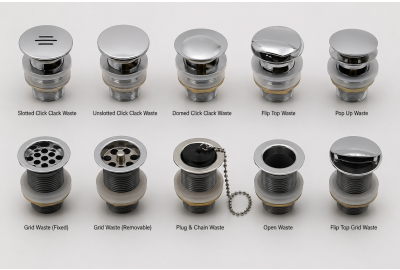
Hand basins are a focal point in the bathroom; we pay attention to the basin and the fittings, so getting your wash hand basin right is vital. For functionality, knowing how to measure the space for your basin is vital, along with learning how to measure the basin waste size and answering the question: do I need a slotted or unslotted waste? Choosing the right basin waste type might not seem important, but with several sizes and options available, making the best decision for your lifestyle could make all the difference.
What is a basin waste?
Basin waste systems are often overlooked yet are an underrated component when refurbishing your bathroom. There are many types of basin waste, each with its own design, including slotted and unslotted. As with most functional items, there is an easy rule to follow.
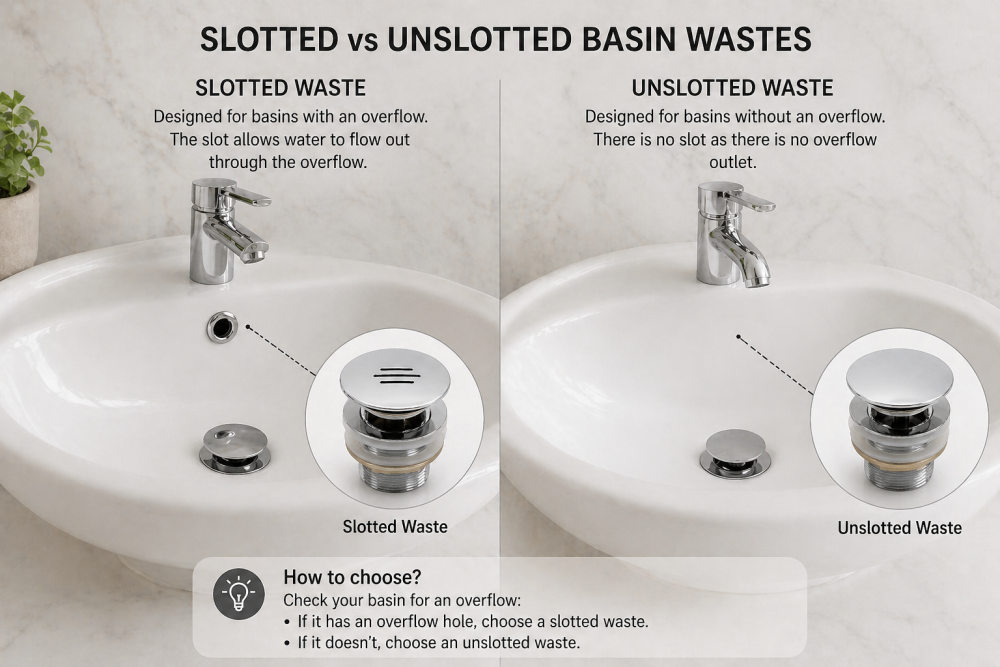
If your sink has an overflow, you will need a slotted basin waste. Not all sinks have an overflow; in sinks like this, you will need to install an unslotted basin waste. An unslotted basin waste is watertight, so it will not allow any water that has gone into the overflow to flow back into the waste pipe. Slotted wastes allow overflow water to drain, whether the waste is open or closed. The slotted and unslotted terminology refers to the pipe work, but in the world of hand basins, there is so much more to discuss.
What are the different types of basin wastes?
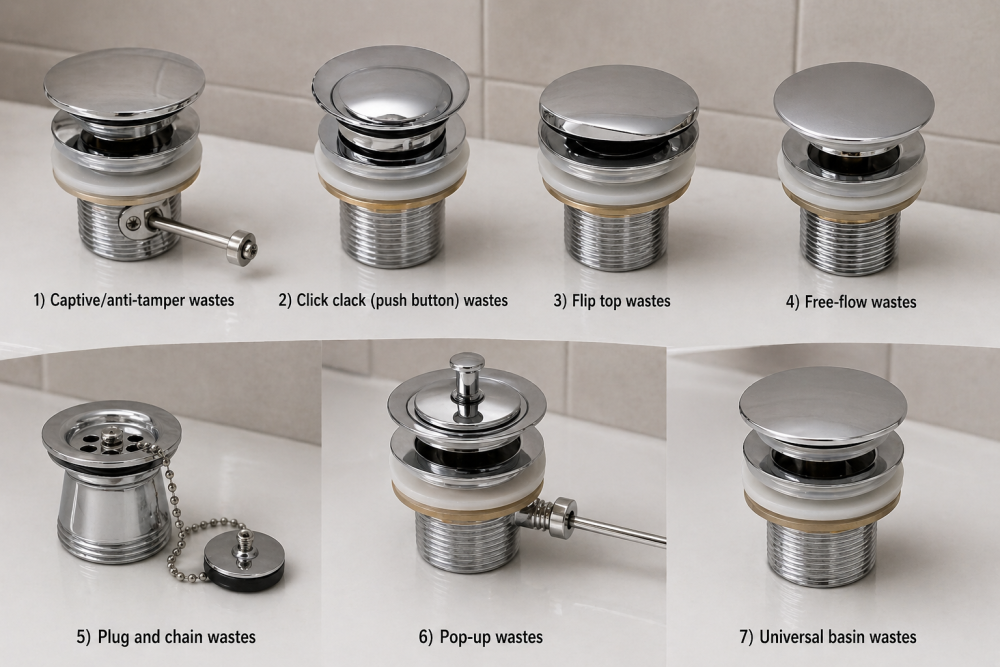
Apart from the universal question, why are there 2 sizes of basin waste? And what is a basin waste (which we covered in the section above), the next factor to consider is the style of waste that accompanies different plugs.
1) Captive/anti-tamper wastes
Captive or anti-tamper wastes are basin wastes; they bridge the gap between a plug-and-chain waste and a click-clack waste. Anti-tamper has a plug attached to a bar, which is then attached to the waste fitting. The mechanism’s design stops the plug from being removed from the property. These are commonly used in hotels, pubs, and public and commercial environments.
2) Click clack (push button) wastes
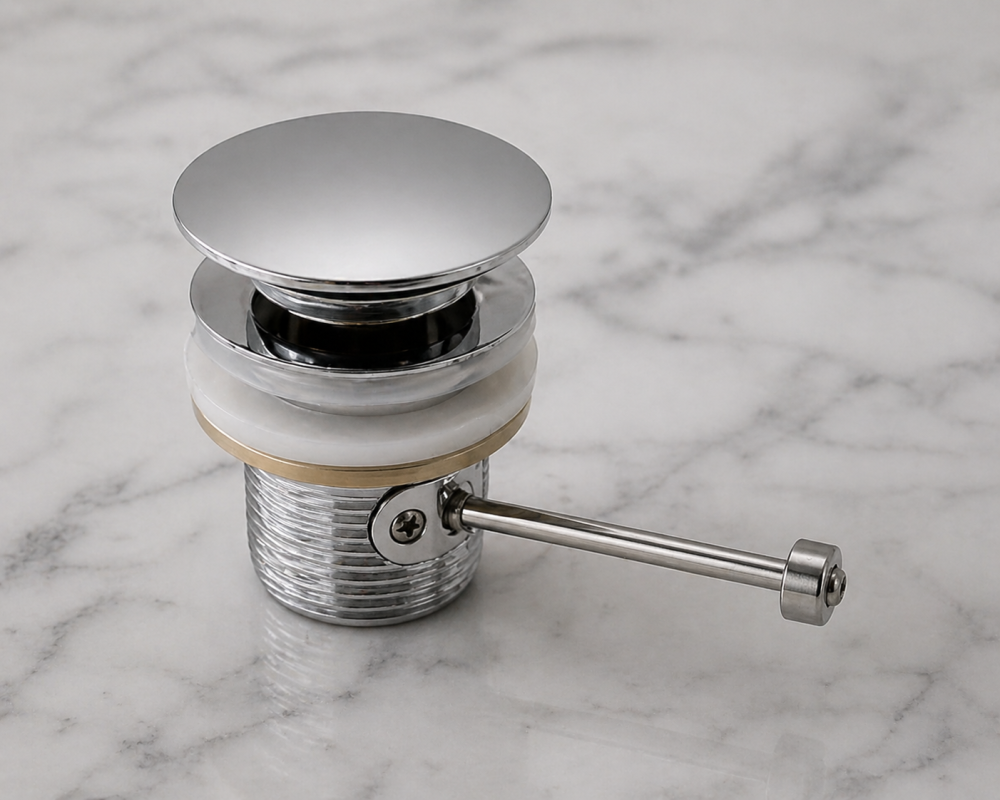
Click & clack or push-button (or sprung) waste are the same; they are just called different names depending on where you live in the UK. The click clack basin waste is the most popular option, as it has a simple design, making it easier to use and maintain than most other styles. You simply push the stopper down once to close it, then push or click it again to open it. There are a couple of different types of push-button clicker wastes, including easy clean wastes, designed to make removing hair and grime from the waste easier. An example can be seen with the McAlpine CW60-CB 32mm Slotted Basin Clicker Waste.
3) Flip top wastes
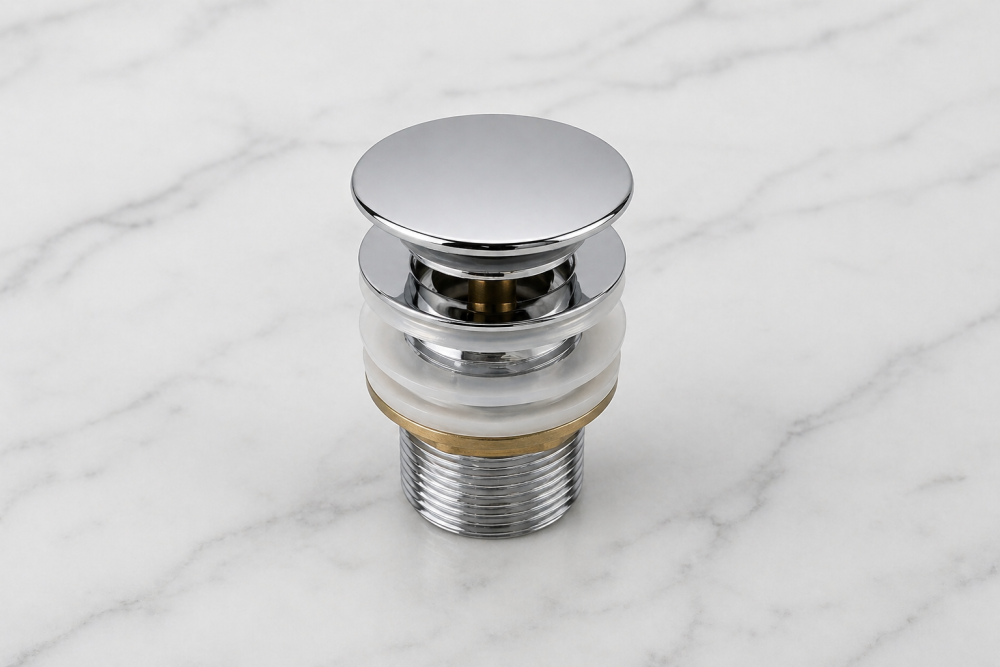
Flip-up top basin wastes are most common because the disc-shaped plugs that sit inside the waste hole make water drainage easy. You rotate the stopper to allow water to flow through or to stop it while filling the basin. These disc-shaped plugs are non-removable from the waste, so you cannot lose them. A flip top basin waste looks modern in a traditional way and is particularly useful for heavy-handed families, which might break a push-button waste mechanism. Example - Slotted Flip Over Plug Basin Waste 1 1/4" – Chrome.
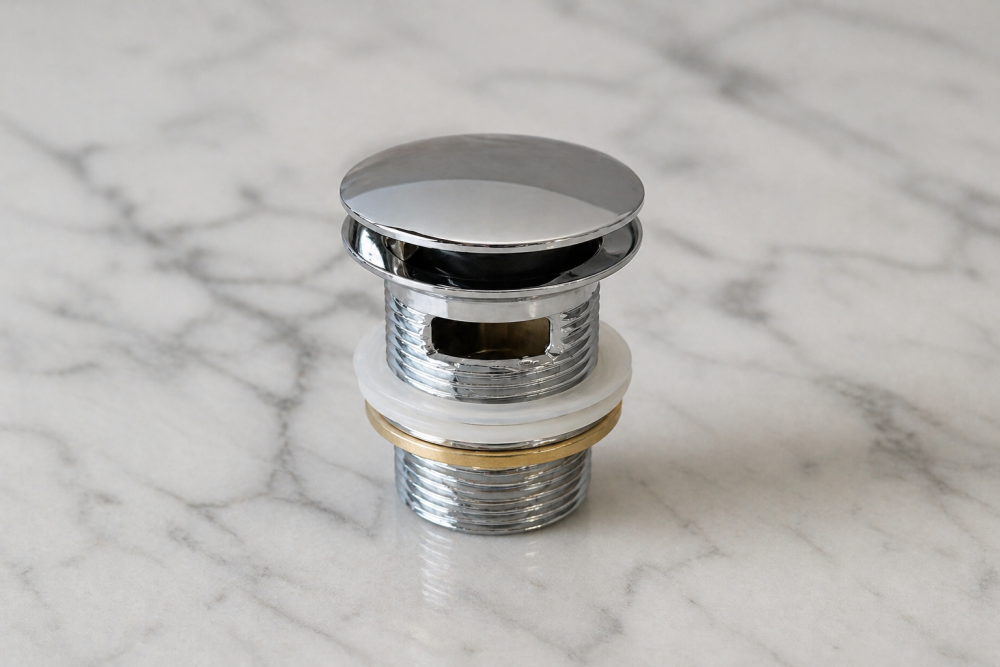
4) Free-flow wastes
Free-flow basin wastes often look like a push-button or click-clack waste, but do not close. These wastes are free-flowing and remain open; the user cannot close the plug hole. These are often used in commercial bathrooms to prevent overflow, or in compact cloakrooms where small hand basins lack an overflow. In terms of water consumption, freeflow wastes are not as environmentally friendly, but they serve a useful purpose when overflowing basins are a factor in unattended bathrooms.
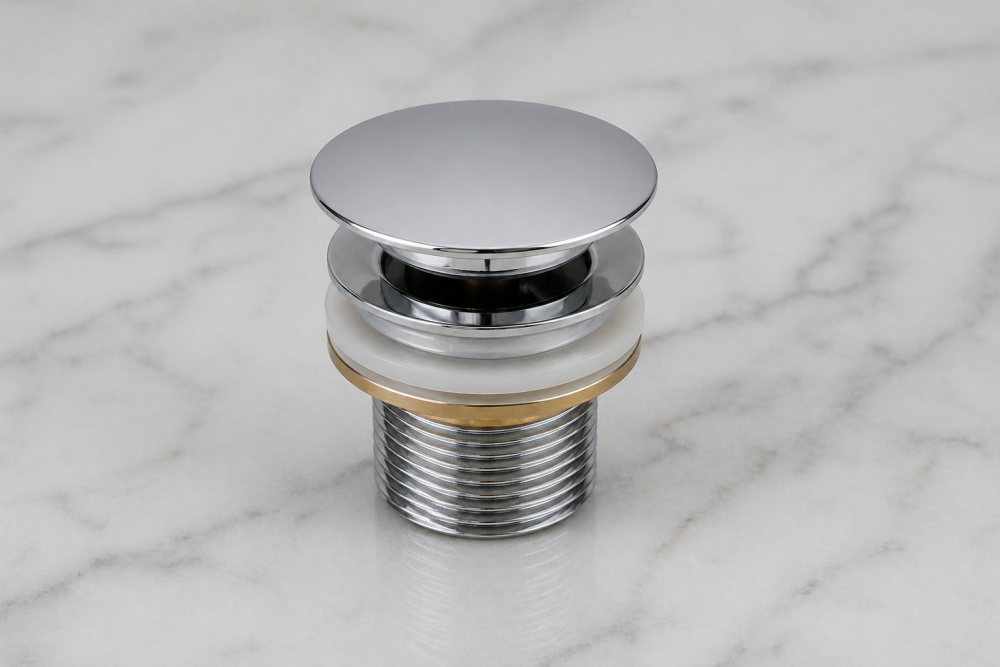
5) Plug and chain wastes
P&C wastes are the most traditional form of basin waste, with which most people are familiar. They consist of a plug (metal-coated or plastic) connected to a chain that can be moved to cover the waste hole or set aside when not in use. Plug and chain basin wastes are the most basic wastes available, but be careful, as not all basins are suitable for a plug and chain. Plug and chain wastes require a chain stay, which is a hole through which the chain passes, opposite to the plug, where the chain fixes to the basin. Most modern-style basins do not have a chain-stay hole (the hole that secures the chain to the ceramic). So, it is worth double-checking before purchasing.
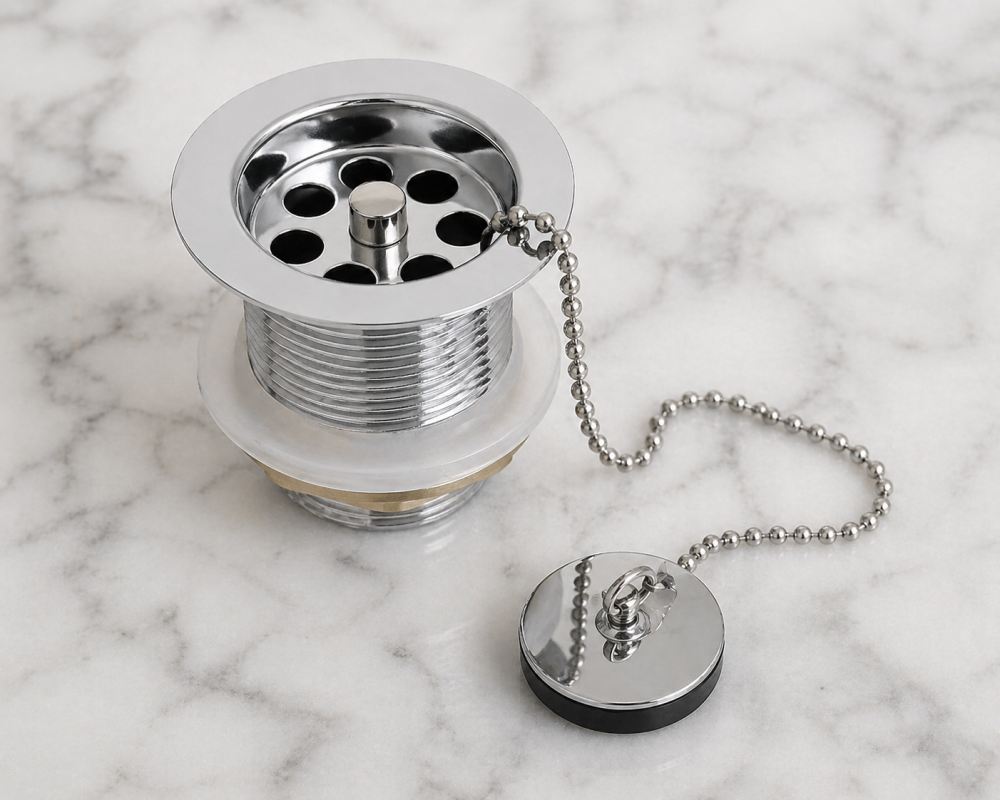
6) Pop-up wastes
Pop-up basin waste fittings operate with a lever or bar, often located on the back of your mixer taps. The operational lever is pulled up to lower the plug stopper and pushed down to pop up the waste. These wastes are normally supplied with a basin tap and are described as pop-up wastes. While these pop-up waste fittings are made to last, they are often the first element of the waste fitting to fail, especially in households with many occupants.
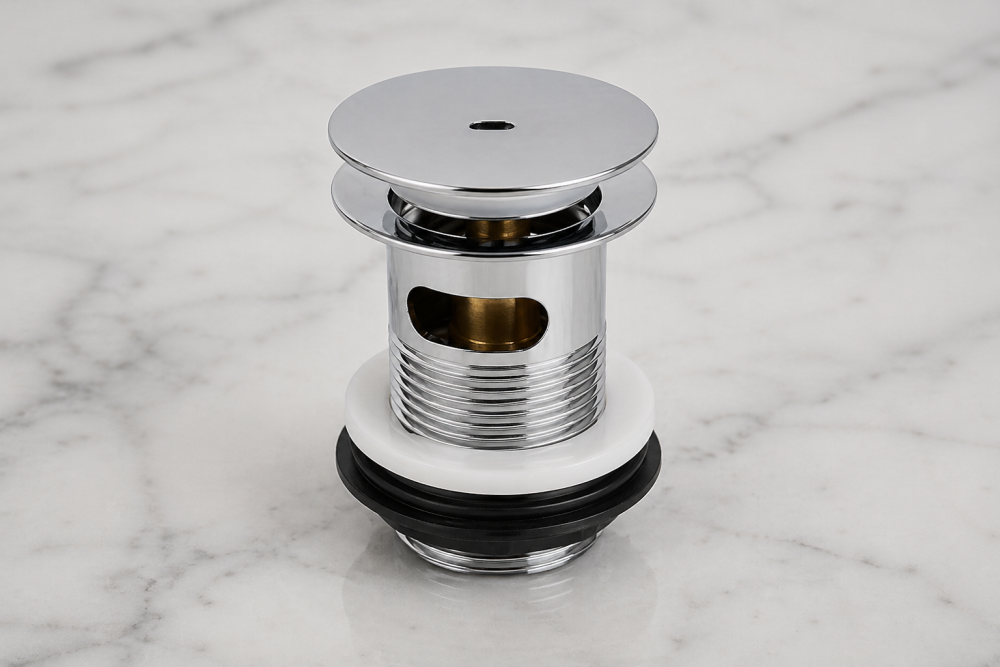
7) Universal basin wastes
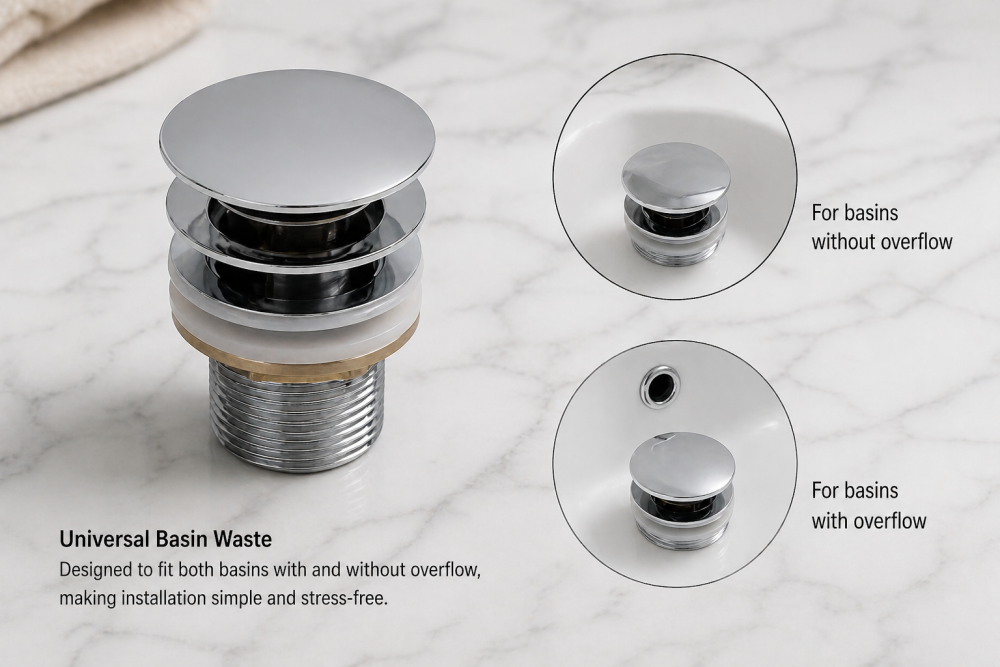
Universal basin waste is a relatively recent innovation in bathroom basin waste solutions that solves the confusion between slotted and unslotted wastes. Universal basin wastes’ innovative design allows them to be installed on both overflow and non-overflow basins. Considered the no-fuss option, universal takes the stress away from choosing basin waste types.
Comparing slotted versus unslotted wastes
When comparing slotted vs unslotted basin wastes, it is worth knowing the following: Slotted basin wastes are more common because they are designed for sinks with an overflow, and most hand-wash basins have this facility. Unslotted wastes are for use with basins without an overflow. When asking yourself or your plumber, "Do I need a slotted or unslotted waste?" to prevent flooding in my home, the answer will almost always be dependent on the circumstances.
Slotted wastes
Slotted basin wastes are more common because they are designed for sinks with an overflow, and most bathroom or cloakroom basins have the facility to drain away water before it overflows. A basin overflow is a small hole located below the taps at the back of the basin to take on water if you leave the tap running, or you overfill your basin with the plug-in.
These cleverly designed waste mechanisms are compact drainage assemblies. The body is typically cast or machined into a cylindrical housing with a side slot that aligns with the basin’s overflow channel. Internally, a threaded shaft and sealing system use rubber or silicone washers to create a watertight compression seal between the waste flange and basin.
Slotted wastes are usually made from brass for strength, corrosion resistance, and ease of machining, then finished with chrome plating or similar coatings. Some lower-cost versions use ABS plastic. Moving parts, such as springs, are often made of stainless steel for durability and wear resistance.
Unslotted wastes
Unslotted wastes work by draining the water away from the hand-wash basin into the main waste. They are watertight when closed, so allow the bathroom sink to fill with water, then when opened, the unslotted waste allows the water to drain away.
Unslotted waste mechanisms are compact drainage assemblies designed for basins without an overflow. The main body is typically cast or machined into a cylindrical housing without side openings, creating a sealed unit that directs water straight through the drain. Internally, a threaded shaft and sealing system use rubber or silicone washers to form a watertight compression seal between the waste flange and basin.
Like slotted and unslotted basin wastes, which are usually made from brass for strength, corrosion resistance, and ease of machining, then finished with chrome plating or similar coatings. Some value versions use ABS plastic. Moving parts, such as springs, are often made of stainless steel for durability and wear resistance.
Do I need a slotted or unslotted waste?
Ultimately, you need a slotted or unslotted waste, depending on whether your hand basin has an overflow hole. The question is which one.
Why is choosing the correct basin waste types important?
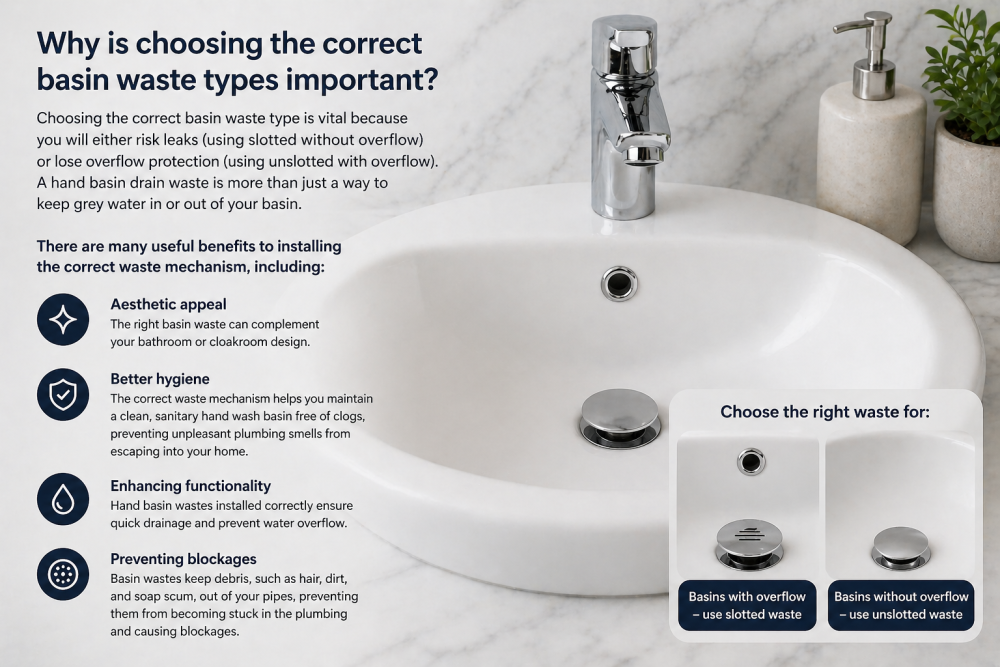
Choosing the correct basin waste type is vital because you will either risk leaks (using slotted without overflow) or lose overflow protection (using unslotted with overflow). A hand basin drain waste is more than just a way to keep grey water in or out of your basin.
There are many useful benefits to installing the correct waste mechanism, including:
• Aesthetic appeal – the right basin waste can complement your bathroom or cloakroom design
• Better hygiene – the correct waste mechanism helps you maintain a clean, sanitary hand wash basin free of clogs, preventing unpleasant plumbing smells from escaping into your home.
• Enhancing functionality – hand basin wastes installed correctly ensure quick drainage and prevent water overflow
• Preventing blockages – basin wastes keep debris, such as hair, dirt, and soap scum, out of your pipes, preventing them from becoming stuck in the plumbing and causing blockages
Are basin wastes a standard size?
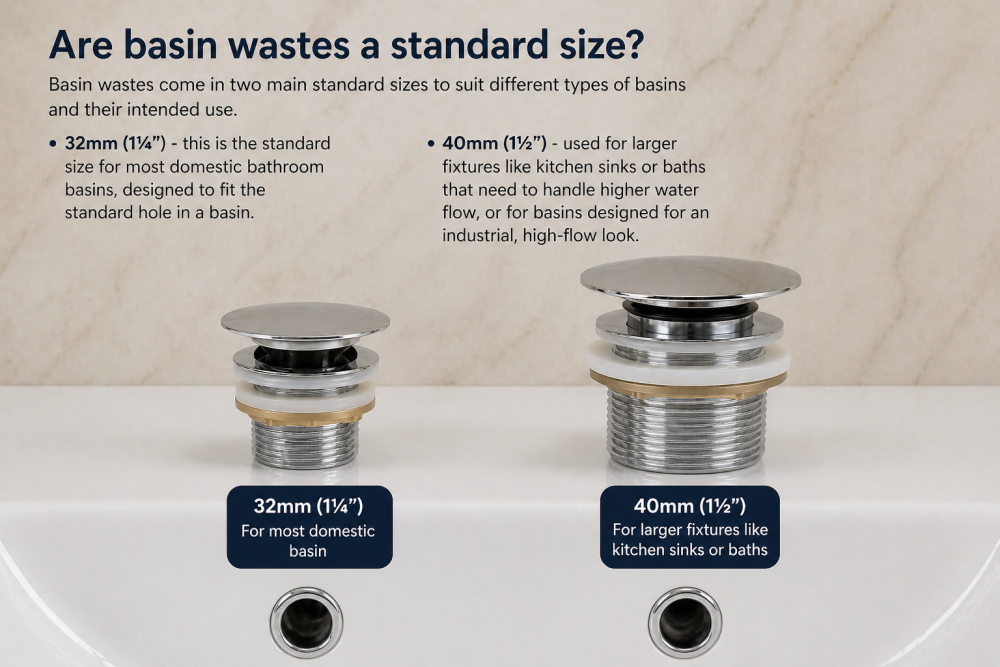
There are generally two sizes available. 2mm (1¼”): This is the standard size for most domestic bathroom basins, designed to fit the standard hole in a basin. 40mm (1½”): Used for larger fixtures like kitchen sinks or baths that need to handle higher water flow, or for basins designed for an industrial, high-flow look.
Here is the same information, which answers “are basin wastes a standard size?”:
• 2mm (1¼”) - this is the standard size for most domestic bathroom basins, designed to fit the standard hole in a basin
• 40mm (1½”) - used for larger fixtures like kitchen sinks or baths that need to handle higher water flow, or for basins designed for an industrial, high-flow look
Why are there 2 sizes of basin waste?
You can buy two main bathroom waste pipe sizes - 32mm (1¼”) and 40mm (1½”) - each suited to different fixtures. 32mm pipes are used for basins and bidets with lower flow rates, while 40mm pipes are used for baths, showers, and sinks with higher flow rates. Using the wrong size can lead to poor drainage or compatibility issues.
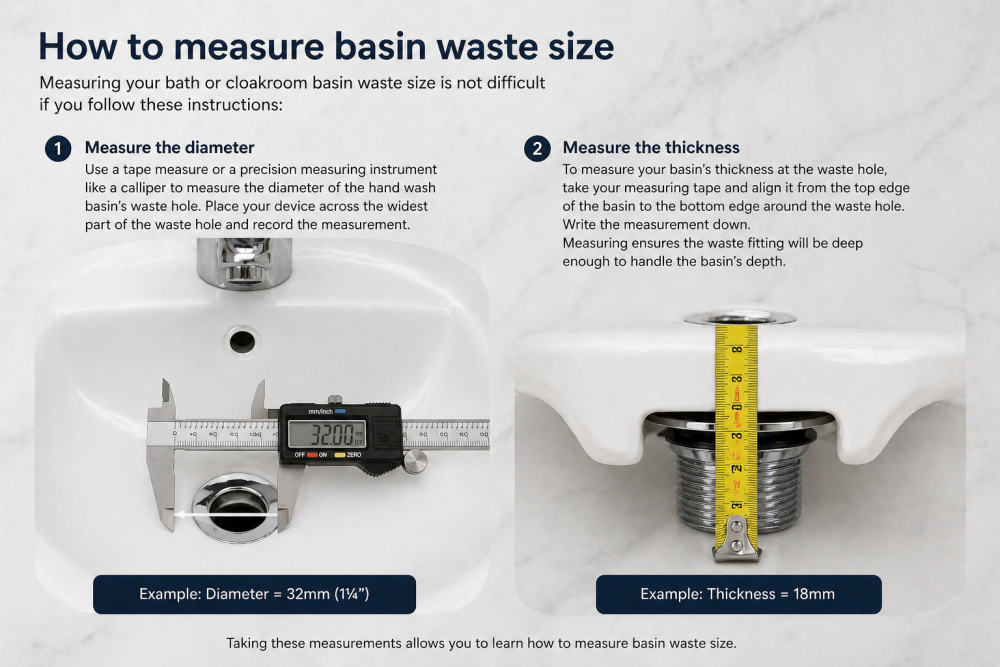
How to measure basin waste size
Measuring your bath or cloakroom basin waste size is not difficult if you follow these instructions:
1. Measure the diameter – use a tape measure or a precision measuring instrument like a calliper to measure the diameter of the hand wash basin’s waste hole. Place your device across the widest part of the waste hole and record the measurement
2. Measure the thickness – to measure your basin’s thickness at the waste hole, take your measuring tape and align it from the top edge of the basin to the bottom edge around the waste hole. Write the measurement down. Measuring ensures the waste fitting will be deep enough to handle the basin's depth
Taking these measurements allows you to learn how to measure basin waste size.
Maintenance and common problems
Basin wastes are generally reliable, but like any plumbing component, they benefit from regular maintenance. Common issues are usually minor and easy to fix. Over time, rubber seals can wear or degrade, particularly on plug-and-chain wastes, which may lead to poor sealing. This is easily resolved by replacing the washer or the plug.
Another typical issue is with click-clack (pop-up) wastes, which can become clogged with hair, soap, and debris. This may prevent the mechanism from opening or closing properly. In most cases, the top cap can be unscrewed anticlockwise, allowing you to clean or replace the internal components before reassembling.
Related articles
We also recommend reading the following related articles:
1) Bathroom Vanity Unit Buying Guide
4) Types of Taps Explained: Learn How to Match Tapware Styles to Different Types of Taps
5) What are the Best Basin Cabinet Ideas? - Countertop Basin vs Inset Basin Comparison
Conclusion
Choosing the correct basin waste is a small decision that delivers a significant impact in the bathroom. By knowing the distinction between slotted and unslotted designs, as well as the various waste styles available, you can ensure your basin functions efficiently while complementing your bathroom layout. Accurate measurement is equally important in preventing installation issues and supporting reliable drainage.
Together with correct assembly and occasional servicing, the right basin waste will enhance hygiene, reduce the potential for water leaks and occasional blockages, and improve day-to-day usability. Taking time to reach a well-informed choice ensures a smooth, long-lasting solution tailored to your bathroom needs.
Contact us
At Plumbing World, we offer an extensive range of basin styles, basin wastes, and plumbing accessories. These are designed to complement contemporary bathrooms and traditional bathrooms. Our products are available at a variety of price points to satisfy different budgets.
Our contact information details are:
• Phone - 0121 508 9987
• Emails - onlinestore@plumbingworld.co.uk
• Contact Us link – click our Contact Us Page
• Live Chat – Please select the blue button located at the bottom left corner of any page to initiate a conversation