
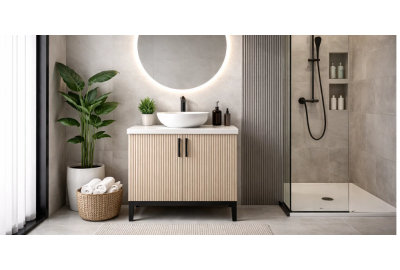
Designing your dream bathroom is an exciting journey that begins long before you choose your tiles or brassware. Success depends on effectively planning a bathroom layout that balances aesthetic inspiration with everyday functionality. Whether you are remodelling an existing room or designing a new bathroom from scratch, the most significant decision often centres on your bathroom furniture.
Choosing between a wall-mounted and a floor-standing vanity unit is far more involved than just a matter of personal taste. It essentially decides how you make use of the space you have and how open the room feels. By having a good grasp of the dimensions of your bathroom and using a bathroom planner you can create a space that provides easy access and space for everyone to move around. This guide will show you some bathroom layout ideas to help you figure out how to arrange your fixtures and select the perfect bathroom vanity units for your place.
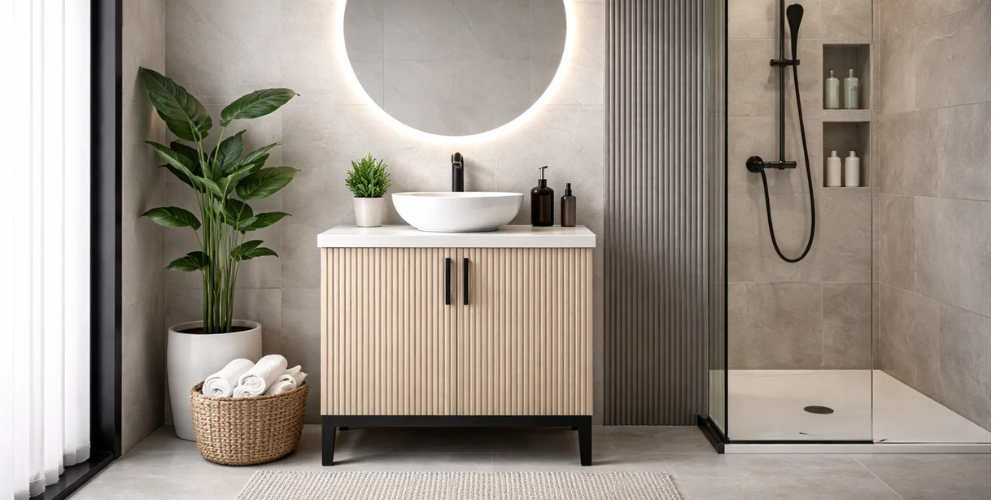
The essentials of planning a bathroom layout
Before you purchase any bathroom products, you must establish a clear floor plan. A new bathroom planner is an invaluable tool for visualising how different bathroom fixtures, such as the toilet, sink, bath, and shower, will interact. Start by taking accurate measurements of the wall space, noting the position of windows, the bathroom door, and any sloping ceilings.
When planning a bathroom layout, the most restrictive factor is usually the soil pipe. While you can move a sink or a shower relatively easily, relocating a toilet often requires significant plumbing work. If you are on a budget, try to keep the toilet in its original position. Consider the "clearance" required around each item; you need enough room to dry yourself after a shower and easy access to the vanity. Professional tips often suggest keeping the layout simple by placing major plumbing along one wall to save on installation costs. Whether it is a larger room or a compact en suite, a well-thought-out plan ensures you will not have to make expensive changes later.
Space-saving bathroom ideas in a small bathroom layout
In the UK, many homes feature a small bathroom or a converted shower room where every millimetre counts. Implementing space-saving bathroom ideas is crucial to prevent the room from feeling cramped. One of the best bathroom layout ideas for small rooms is to keep as much of the bathroom floor visible as possible. When the eye can see the tiles extending right to the wall, the room instantly feels bigger.
In a small bathroom layout, consider a wall-hung toilet and a wall-mounted vanity unit. Removing the "footprint" of bathroom furniture from the floor area creates a seamless finish and makes cleaning much easier. If the room is particularly narrow, look for a “short projection" vanity and sink. You might also choose frosted glass for the shower screen to let natural light flow while maintaining privacy.
If your toilet room is a separate room from the bath, you can focus purely on vanity and toilet placement. Always check that the bathroom door has enough space to swing open without hitting the vanity or the bathtub. These small design ideas can create the illusion of more space without moving any walls.
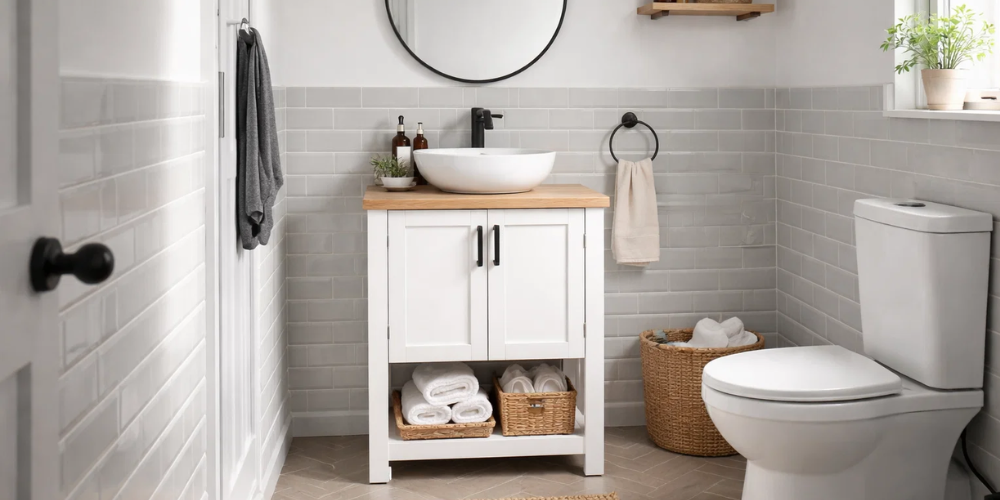
Technical factors that influence your bathroom layout
When planning a bathroom layout, you must work within the constraints of your home’s plumbing and architecture. The soil pipe is the most critical element; its position usually dictates where the toilet must go. Most UK homes have the soil pipe located on an external wall, which is why you often see the toilet and sink lined up along one wall.
Ventilation and windows also play a role. You cannot easily place bathroom furniture or a double vanity in front of a window without blocking natural light or access to the handle. Furthermore, if you are adding a shower to a room with sloping ceilings, you must measure the available space at the highest point to ensure there is enough room for a person to stand comfortably. If you are adding grab bars for accessibility, the layout must allow for a wider "turning circle" for those with mobility aids. Always consult an interior designer or a new bathroom planner to ensure your fixtures and pipes are logically placed for long-term functionality.
Selecting the best bathroom vanity units for your needs
Your choice of vanity unit should reflect the primary user of the room. For an en suite bathroom, vanity ideas often lean toward wall-hung models that keep the space feeling airy and modern. In contrast, a family's main bathroom usually requires the best bathroom vanity units with maximum storage space to keep the room organised.
Consider the materials and colours that will complete your dream bathroom. Textured walnut and light oak bring warmth, while matt black or anthracite provide a modern edge. If you have the room, a double vanity is a life-changer for busy mornings, allowing two people to use the sink simultaneously. Ensure you measure the dimensions of the vanity against the bathroom door swing. There is nothing more frustrating than a door that hits the corner of your new bathroom cabinet. Check the collection at Plumbing World to find a range of styles that suit your floor plan and available space, ensuring your bathroom furniture is the perfect fit for your layout.
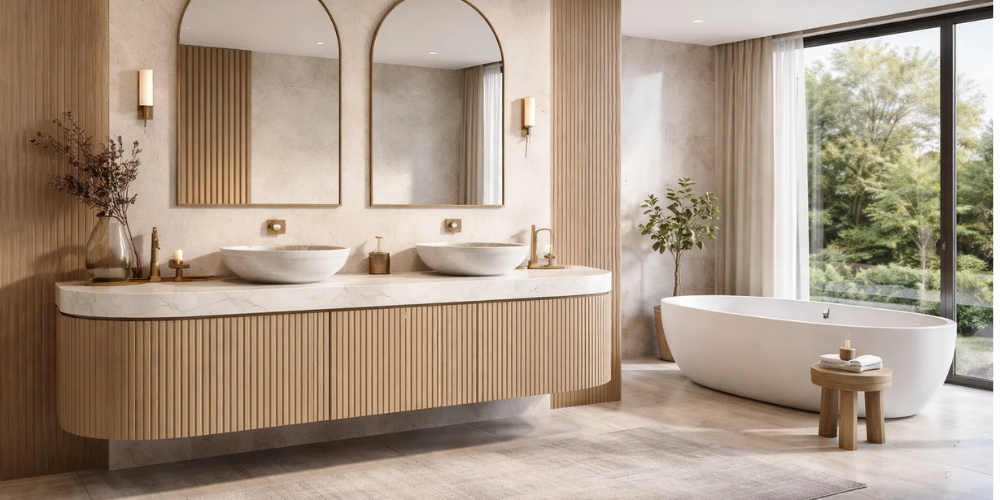
Completing the look with essential bathroom fixtures
A successful bathroom design is a combined effort of all its parts. Once you have decided on your vanity, you must coordinate your other fixtures. Heated towel rails are essential for a cosy room and should be placed within easy access of the bath or shower. If you have opted for a wall-hung vanity, a wall-hung toilet is the logical partner to maintain that spacious floor area.
When it comes to the tub area, a freestanding bath will give you an extra touch of luxury if you have the room for it. If space is tight, a built-in bathtub will be the much more practical choice. Natural light from the windows is always welcome, but with some strategically placed LED mirrors, you can make the vanity area look great, too. If your shower is in a separate room, you can afford to have more fun with the style of your vanity. Use a bathroom planner to play around with the final details, such as where you will place the toilet roll holder and towel rails. By getting these details right, you can create a bathroom that looks great but is also perfect for your day-to-day. By focusing on these key elements, you can turn your bathroom into a space that is not only full of style but is perfectly suited to your needs. Find the inspiration you need to give your home a makeover today.
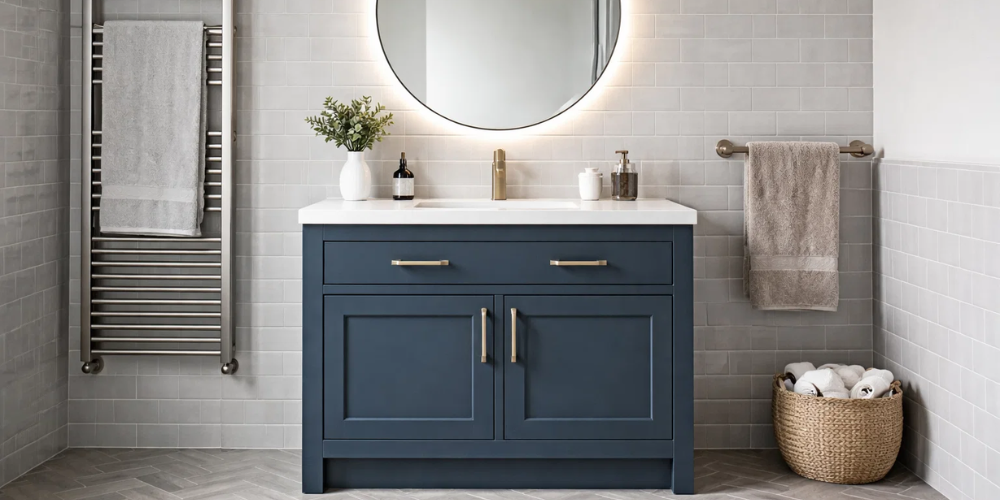
Wall-hung vanity units - A modern design approach
Wall-hung vanity units have become a sought-after choice in modern bathroom design. They are a top choice for anyone looking to create a sleek and minimalist look in their bathroom. By suspending them from the wall, they lift the sink and storage off the ground, which creates a 'floating' illusion that is modern and contemporary in bathroom interiors.
Advantages of the wall-hung style
Here are six top advantages of the wall-hung style
1) Customisable height - unlike floor-mounted units, you can position a wall-hung vanity at the exact height that suits you, which is a great idea for two people of different heights
2) Easier cleaning – this style makes cleaning easier by leaving the floor beneath the vanity completely accessible
3) Improves flexibility - when planning a bathroom layout, especially in compact or awkward spaces
4) Mobility and accessibility – allow easier access for users with mobility needs due to adjustable installation height
5) Modern aesthetic - they provide a sleek, floating appearance that pairs perfectly with other wall-mounted fixtures like heated towel rails and wall-hung toilets for a cohesive look
6) Visual spaciousness - by exposing more floor space, they make even the tiniest en suite feel spacious and less cluttered
However, there are technical features to consider. A wall-hung unit requires a solid wall or a reinforced "stud" wall to support the weight of the cabinet, the basin, and the water when the sink is full. During remodelling, your interior designer or plumber will need to ensure the wall is strong enough to avoid issues later.
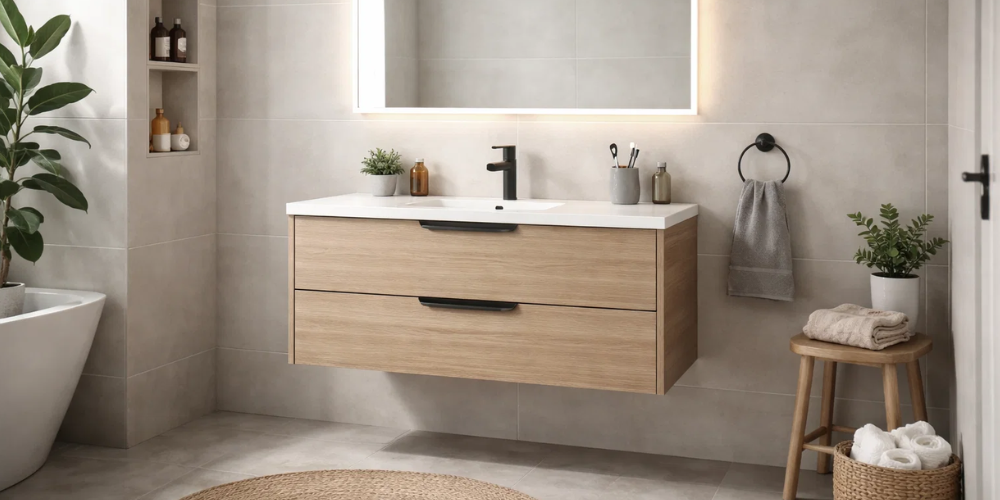
Floor-mounted vanity units - Character and storage space
For those who prioritise storage space and a traditional feel, freestanding vanity units remain a top choice. These are often the best bathroom cabinets for a main bathroom where multiple people need to store toiletries, towels, and cleaning supplies.
Why choose floor-mounted furniture?
Here are six reasons to sit bathroom furniture on the floor:
1) Ample storage - offers generous internal space for toiletries, towels, and essentials
2) Better weight support - easily supports heavier basins, stone worktops, and solid materials
3) Classic character - if you have a freestanding bath or a traditional bathtub, a floor-mounted vanity in oak or walnut adds a sense of permanence and elegance
4) Ease of installation - these units do not require the same level of wall reinforcement as wall-hung models. They are often "plug and play" once the plumbing is aligned
5) Easier plumbing access - conceals pipework while allowing straightforward
6) Maximum storage - because the unit sits directly on the bathroom floor, it utilises the entire height from the floor to the sink, offering more space for deep drawers and cupboards
In a larger space, a floor-mounted double vanity is a real showstopper. It gives a "furniture" feel to the room that wall-hung units just cannot match. The only catch is, that they consume more floor space. Therefore, they are best suited to layouts where you do not need to squeeze every inch out of the room.
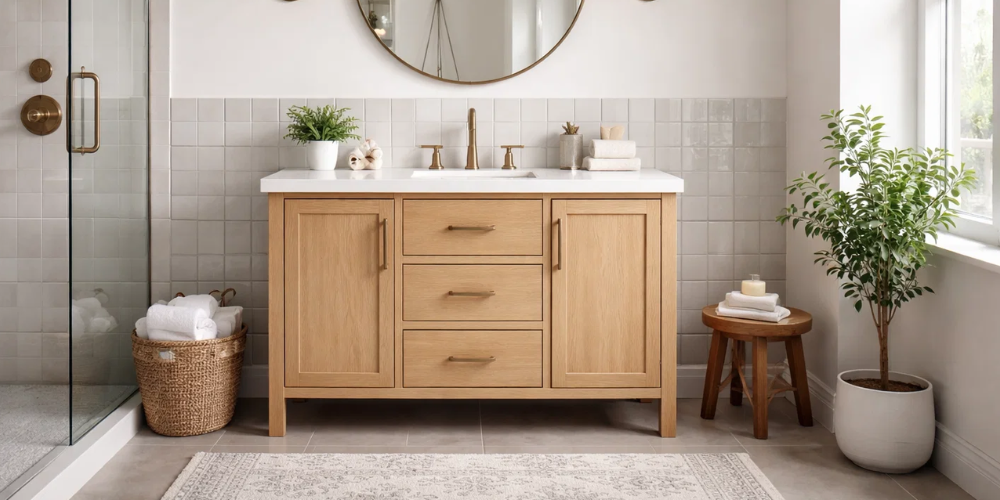
Wall-hung vs floor-mounted vanity comparison
Planning a bathroom layout often begins with choosing the correct vanity position. Wall-hung and floor-mounted vanity units impact space, storage, and overall bathroom design. We summarise twenty features to consider in the following analysis:
| # | Wall-hung | Floor-mounted |
|---|---|---|
| 1 | Saves floor space in a small bathroom layout | Uses the bathroom floor for a solid presence |
| 2 | Wall-mounted vanity unit suits modern bathroom design | Floor-mounted vanity suits traditional bathroom design |
| 3 | Ideal for space-saving bathroom ideas | Better suited to larger room layouts |
| 4 | Creates more visible floor area | Reduces the visible floor area |
| 5 | Works well in a compact shower room | Suits a main bathroom with a bathtub |
| 6 | Complements contemporary bathroom vanity ideas | Fits classic bathroom furniture styles |
| 7 | Allows easier access for cleaning | Cleaning is harder around the base |
| 8 | Requires careful wall and plumbing planning | Easier installation with existing plumbing |
| 9 | Pairs well with a wall-hung toilet | Works well beside a freestanding bath |
| 10 | Makes better use of available wall space | Uses more of the available space |
| 11 | Suitable for a small bathroom or toilet room | Better for family bathroom storage |
| 12 | Floating design improves bathroom layout ideas | Grounded design adds visual weight |
| 13 | Often paired with modern bathroom fixtures | Common with traditional bathroom fixtures |
| 14 | Ideal for narrow bathroom floor plans | Better for wider bathroom layouts |
| 15 | Works well with frosted glass shower screens | Complements framed shower enclosures |
| 16 | Allows flexible positioning near the bathroom door | Placement is limited by the floor area |
| 17 | Popular choice among interior designer trends | Favoured in classic house renovations |
| 18 | Storage space is usually drawer-based | Offers cupboards with deeper storage |
| 19 | Suitable for a double vanity layout | Ideal for a single sink layout |
| 20 | Supports efficient planning of a bathroom layout | Suits straightforward bathroom planning |
Conclusion
Planning a Bathroom layout all comes down to finding the perfect fit for your home. Whether you are looking to free up some space with a floating unit or looking to buy serious storage that the best bathroom cabinets can offer, your choice is going to set the tone for the whole bathroom. For instance, the debate over wall-hung vs floor-mounted vanities is all about finding a balance between keeping your floor clear and still looking visually great. By choosing the right bathroom vanity units from the start, you avoid having to make changes later, making sure your bathroom vanity ideas live up to their promise.
Contact us
Our contact information details are provided below:
• Call us - 0121 508 9987
• Email us - onlinestore@plumbingworld.co.uk
• More details – are available at our Contact Us Page
• Live Chat – simply click the blue button at the bottom left of any page