
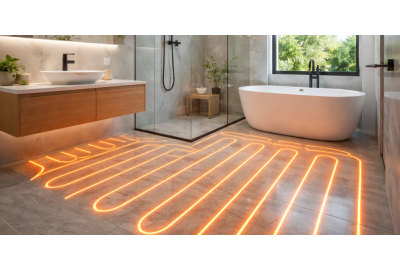
Have you ever considered installing underfloor heating? This informative article provides full guidance on various aspects of underfloor heating in bathrooms. Look out for sections including how long does underfloor heating take to warm up, a discussion of underfloor heating benefits and how underfloor heating works.
In our guide, we also provide a comparison table of wet vs electric underfloor heating. By considering all the factors and matching them to your budget, preferred system, and bathroom needs, you can buy the perfect underfloor heating system for your home.
Underfloor heating in bathrooms
Underfloor heating for bathrooms is an increasingly popular choice for homeowners. Installing electric underfloor heating or water systems creates a luxury spa-like feel when bathing or showering. Warm tiles or a warm floor are just the start! You will no longer need a towel radiator as the bathroom will naturally heat up when you install underfloor heating. Whether you have tiles, stone, a wooden floor or carpet, an underfloor heating system (UFH system) is a great investment.
How underfloor heating works
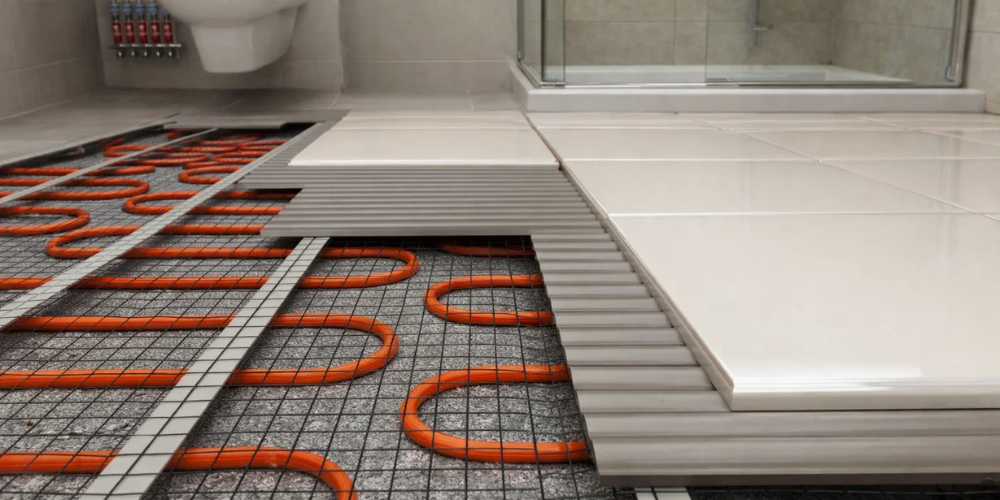
The electric underfloor heating warms the subfloor, which then radiates heat and warmth into the bathroom. There are two types of underfloor heating systems:
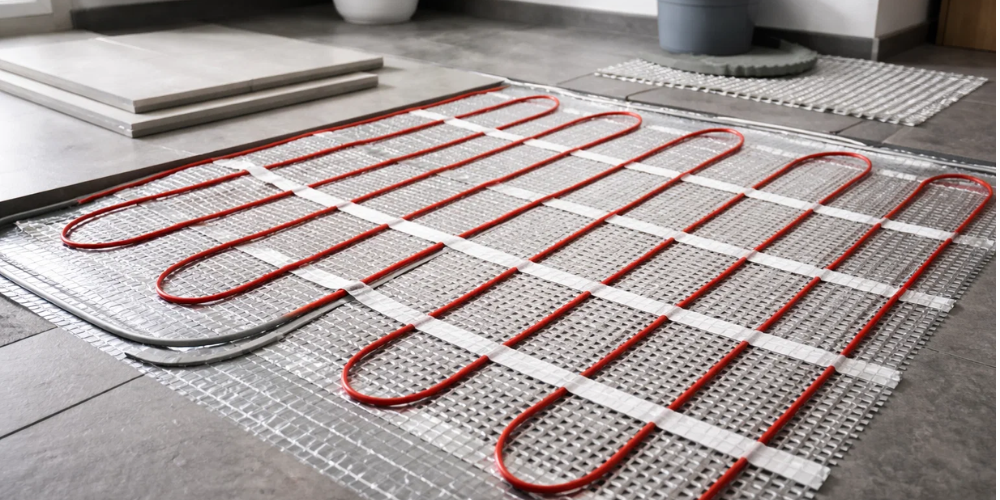
• Electric systems - an electric UFH heats cables or mats beneath the floor finish and will need to be connected by a qualified electrician
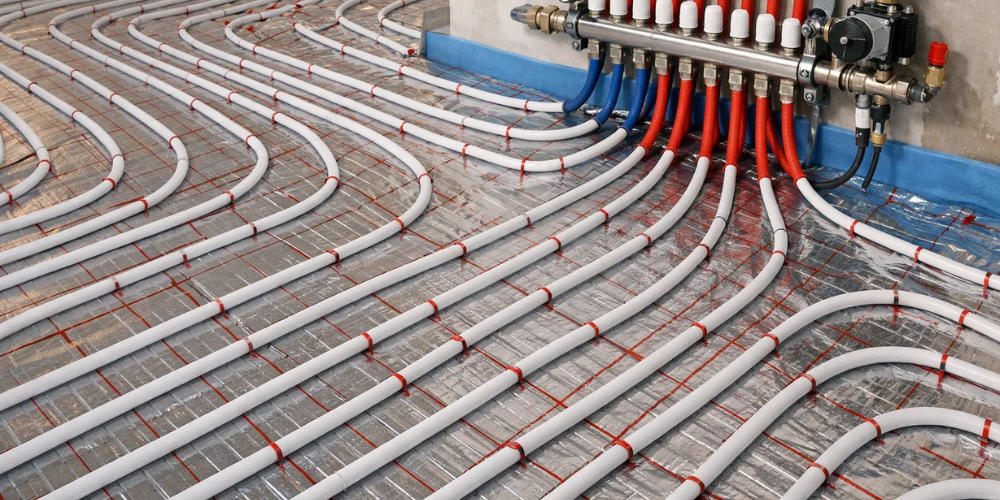
• Water-based systems - a water UFH circulates warm water through pipes, which are connected to either a boiler or a heat pump
Both systems are controlled by an underfloor heating thermostat, which helps you control how much heat is output and enables homeowners to reduce energy consumption and lower running costs.
Plumbing World can supply all your underfloor heating product requirements, including digital thermostats, loose cabling, tile insulating boards and electric underfloor heating mats. View our underfloor heating solutions at this link.
How long does underfloor heating take to warm up?
This varies depending on factors such as the system type, finish of the floor and levels of insulation:
System type
• Electric-based - between 20 minutes and 60 minutes for noticeable warmth (particularly underfoot). This system works well where short and targeted periods of heating are needed
• Water-based (wet) - this takes much longer than electric, usually between 90 minutes and 3 hours to heat the screed and reach the desired temperature. Wet systems are designed for consistent heat rather than rapid heat, so they work well once they are warmed up
Floor coverings
The floor type impacts warming-up times, too:
• Carpet and wood - take longer as they insulate more and are efficient at retaining warmth
• Tiles and stone - these heat up more rapidly and retain warmth well
Insulation and room size
If there are good levels of insulation, the heat-up time reduces, and the underfloor heating system is more efficient. It is also worth mentioning that larger rooms tend to slow the process.
Bathroom underfloor heating benefits
Bathroom underfloor heating offers numerous advantages:
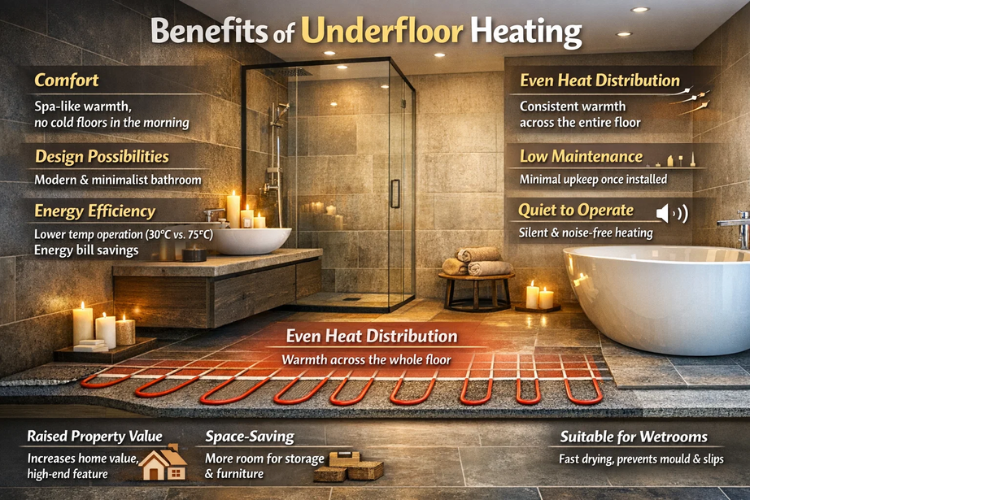
• Comfort - a sense of luxury with a spa-like feel, no cold bathroom floors in the morning, a much more relaxing sensation in the winter months
• Design possibilities - contributes to a modern and minimalist bathroom design
• Energy efficiency - less energy is used as underfloor heating operates at lower temperatures than radiators (around 30°C vs. 75°C), and you enjoy the energy bill savings!
• Even heat distribution - the entire floor is heated, which contrasts with radiators, which can have cold spots and heat the air first
• Low maintenance – once installed correctly, systems require minimal ongoing upkeep
• Quiet to operate - this heating method is entirely quiet compared to radiators or fan heaters
• Raised property value - Estate Agents love bathroom underfloor heating, it is a selling point, a high-end feature that is attractive to buyers and raises the property valuation
• Space-saving - removes the need for radiators, freeing up wall space and creating layout space for storage and furniture, etc.
• Suitable for wetrooms - as the floors dry rapidly, it is perfect for wet rooms, it helps to prevent mildew, mould, dust mites and slips
Wet vs electric underfloor heating guide
Wet and electric underfloor heating systems suit different property types, budgets, and usage patterns, so understanding the differences helps you choose correctly.
| Criteria | Wet underfloor heating | Electric underfloor heating |
|---|---|---|
| System type | Uses warm water circulated through pipes connected to a boiler or heat pump | Uses electric heating cables or mats powered by the mains supply |
| Installation complexity | More complex, usually installed during major renovations or new builds | Simpler and quicker, suitable for retrofitting existing rooms |
| Installation cost | Higher upfront cost due to pipework, manifolds, and labour | Lower initial cost with minimal disruption |
| Running costs | Lower long-term running costs, especially with heat pumps | Higher running costs due to electricity prices |
| Warm-up time | Slower warm-up, typically 1.5 to 3 hours | Faster warm-up, often 20 to 60 minutes |
| Best room size | Ideal for larger areas and whole-house heating | Best suited to small rooms such as bathrooms and en-suites |
| Floor height impact | Greater increase in floor build-up | Minimal impact on floor height |
| Energy efficiency | Very efficient when used continuously | Efficient for short, targeted heating periods |
| Heat output consistency | Provides steady, even background heat | Provides responsive, on-demand heat |
| Maintenance requirements | Requires occasional system checks, like central heating | Virtually maintenance-free once installed |
| Typical lifespan | Long lifespan, often 25 to 50 years | Shorter lifespan, typically 15 to 25 years |
Conclusion
There are two types of systems for underfloor heating in bathrooms. Both systems are energy efficient in different ways, with electric heating being more rapid and water-based taking longer to heat up but providing a more consistent temperature. Choose this subfloor heating for a range of possibilities, including comfort, design options, energy efficiency, even heat distribution, low maintenance demands, quietness of operation, increased property valuation, and to save space.
Read our wet vs electric underfloor heating guide to compare the features of each system. The overall underfloor heating cost needs to include UFH system materials, professional services and consumables such as tile adhesive. Our focus here has been bathrooms, but of course, other individual rooms could have underfloor heating laid directly, including kitchens, living rooms, hallways and utility/laundry rooms.
Contact us
Why not contact us to discuss underfloor heating in bathrooms? Our friendly team can advise on how underfloor heating works and the best products from our range to meet your needs. It is possible to choose underfloor as your primary heat source in a room. We believe our cheaper products could be part of your solution.
Contact us to discuss your requirements in these ways:
• Phone - 0121 508 9987
• Email - onlinestore@plumbingworld.co.uk
• Full contact information – on our Contact Us Page
• Live Chat - click the blue button at the bottom left of any page