
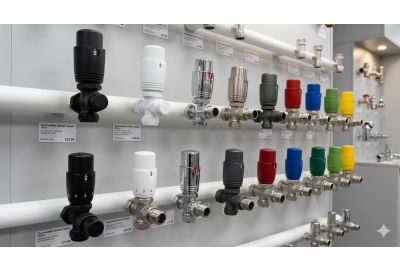
Thermostatic radiator valves, also known as TRVs, are compact fittings attached to radiators that automatically control your room’s temperature. When answering the question, "What are thermostatic radiator valves?", it is easier to explain what they do and how they work rather than what they look like.
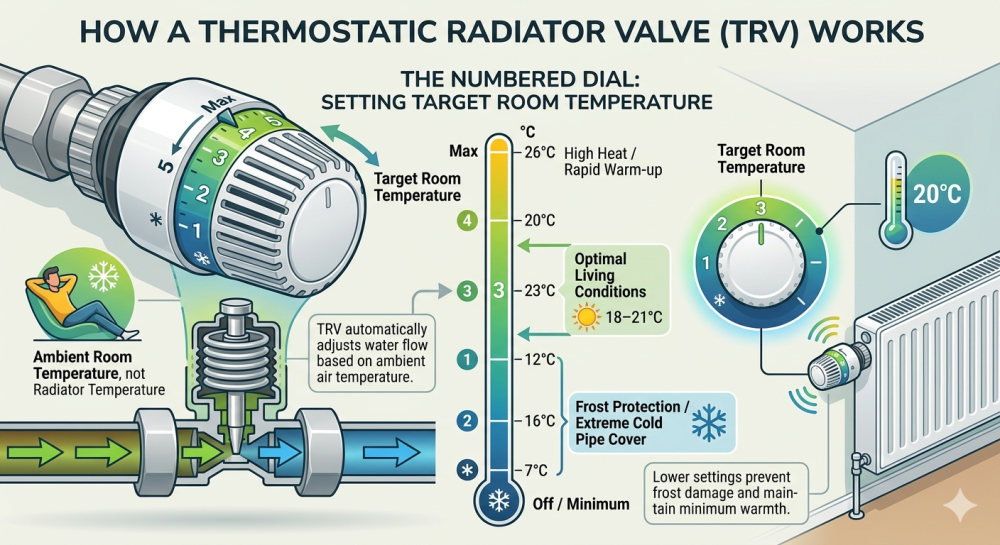
These thermostatic radiator valves work through a sensor in the upper part, or head, that detects air temperature. The best thermostatic radiator valves have a number display (between 1 and 5), which corresponds to your desired temperature. When the area or room reaches the ideal ambient heat, the valve reduces or stops the flow of hot water into the radiator, therefore regulating the heat. In concise terms, thermostatic radiator valve types help keep rooms at a comfortable temperature. Read on as we explore the types of radiator valves.
What are thermostatic radiator valves?
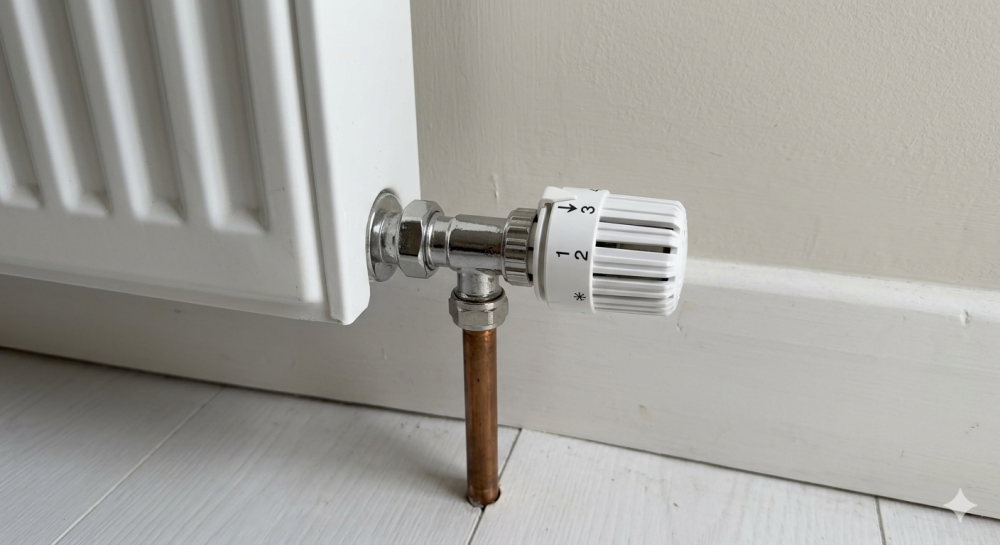
The best TRV valves are self-regulating mechanical control devices used in hydronic (hot water-based) heating systems to modulate the flow of heated water through a radiator based on ambient air temperature. The thermostatic radiator valves consist of two main components: a valve body, which controls the water flow into the radiator, and a thermostatic head, which is the temperature-sensitive element.
The thermostatic element operates on the principles of thermal expansion, which is explained as follows:
• Heat expansion response - as the surrounding air temperature increases, the material inside the sensor (usually wax or liquid-filled) expands, closing the pin that reduces or closes the valve opening, restricting hot water flow
• Cooling contraction response - as the room temperature decreases, the sensor contracts, allowing the valve to reopen and increase flow
A negative feedback control loop is created, meaning the valve continuously adjusts flow to maintain a stable setpoint temperature that suits your needs.
How TRVs work with your heating system and hot water flow
Thermostatic radiator valves operate in the heating system by regulating the flow of hot water that powers your central heating. Heated water is circulated from the boiler through a network of pipes by a pump. As the water reaches a radiator fitted with a TRV, the valve adjusts its opening in response to the surrounding room’s temperature. When the room or area reaches the set temperature, the TRV restricts water flow to reduce heat output. If the temperature drops below the required level, the valve reopens to allow more hot water through. This dynamic flow helps maintain a balanced heat distribution and improves overall system efficiency.
Does the numbered dial refer to the radiator’s temperature or the room temperature?
The numbered dial on the thermostatic radiator valve indicates the room temperature, not the radiator's temperature. Each number setting corresponds to a target air temperature that the valve aims to maintain. Lower numbers typically provide frost protection or extreme cold pipe cover, while mid-range numbers provide settings for comfortable living conditions. Comfort is a personal choice, but 18–21°C is considered optimum. The valve automatically adjusts water flow to maintain this ambient temperature.
Manual radiator valves versus thermostatic radiator valve types
The difference between manual and thermostatic valves is ease of use. TRVs operate passively, requiring no external power source. This reason alone makes TR valves an economic option.
Manual radiator valves
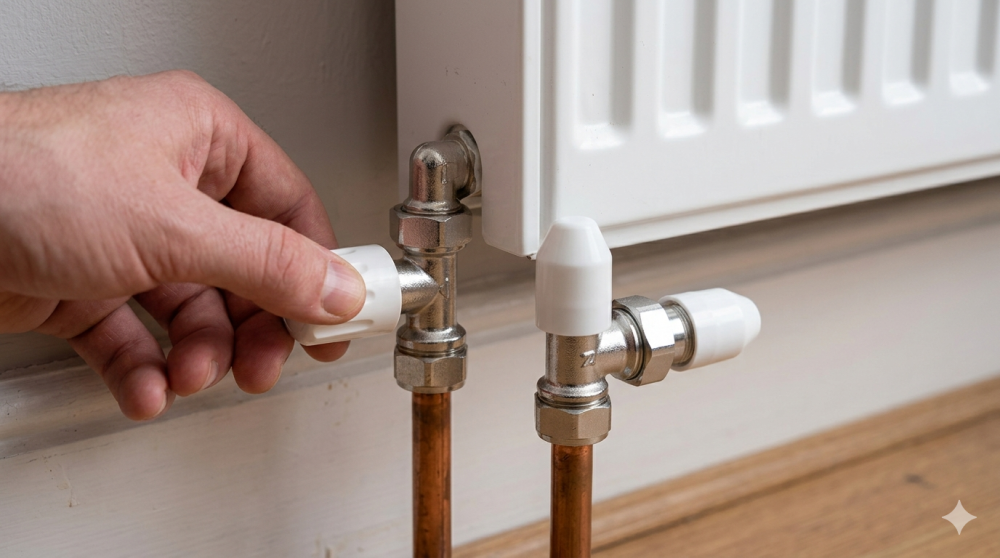
Manual valves are as described. They require manual operation to adjust the environment's temperature. While you can manually regulate the temperature of your individual radiator, it is a much more labour-intensive process that could prove restrictive for those with limited strength or flexibility. Manual radiator valves, or MRVs, are remnants of the early days of plumbing and are generally not preferred in domestic settings. An example is the Kartell 15mm Pair of Angled Manual Radiator Valve – Black.
TRVs
TRVs improve the overall energy efficiency of your system by reducing unnecessary heat output and supporting more consistent thermal comfort throughout the property, without requiring frequent manual adjustments. An example would be Roma Pair TRV Straight Radiator Valves - Brushed Bronze.
Room thermostat interaction and best practice
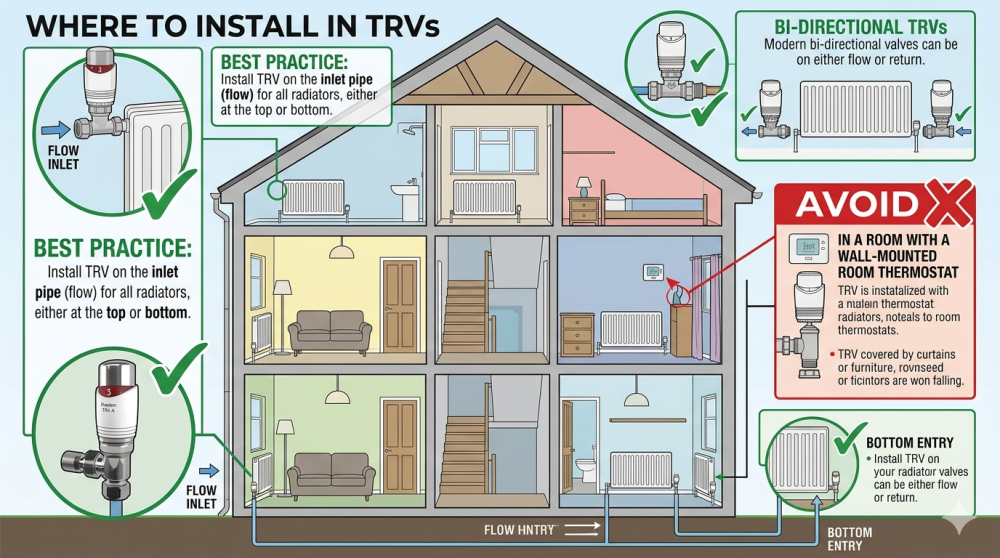
When installing thermostatic radiator valves (TRVs), it is important not to fit a TRV on the same radiator panel as the main room thermostat. This can create conflicts in controlling the heating system. The best practise is to leave one radiator in the thermostat-controlled room fitted with a manual valve, allowing it to act as a stable reference point for the boiler.
In this setup, the room thermostat controls when the boiler fires, responding to the space’s overall temperature. Meanwhile, TRVs operate independently on other radiators, providing localised control by fine-tuning the temperature in individual rooms. This balanced approach ensures efficient system operation, prevents competing signals, and maintains consistent comfort throughout the property.

Energy efficiency, energy use, and heating bills
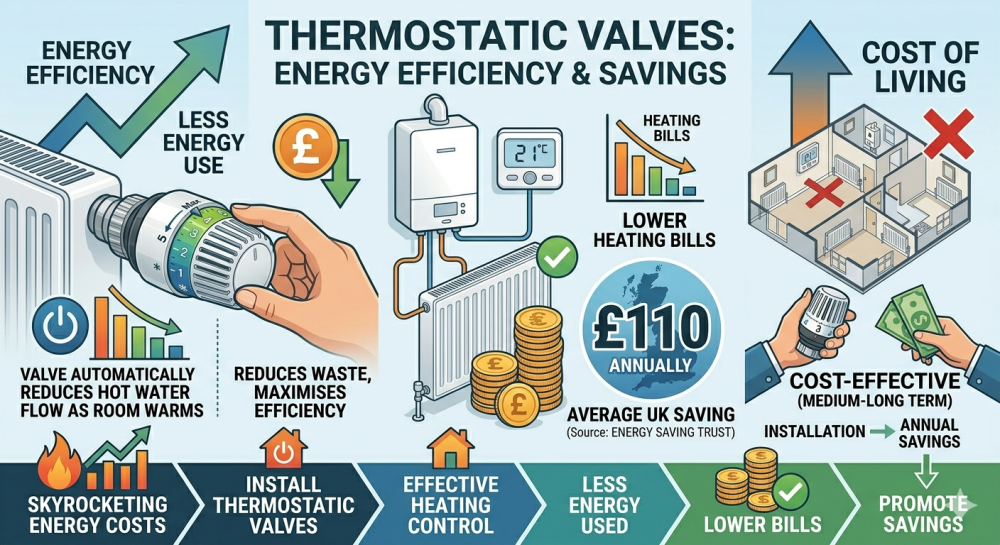
With the cost of living skyrocketing, energy consumption is on everyone's mind. Thermostatic valves control energy use and help control rising heating bills to promote savings. Recent studies by the Energy Saving Trust show that by installing and using your heating controls effectively, you use less energy, which saves money on your heating bills. In fact, installing heating controls is cost-effective in the medium-long term and could save a UK household £110 annually.
Reduce energy and carbon footprint with TRVs
While you are saving money, it is also nice to know that using thermostatic valves is good for the environment. Zonal control from TRVs reduces fuel consumption and associated carbon emissions for heating systems. Combining TRVs with timers and an efficient boiler amplifies reductions in energy use and carbon footprint. Behavioural factors, such as not overheating rooms, are crucial to realising the full carbon-reduction potential.
To ensure you maintain a low carbon footprint, keep the following in mind. You should set your thermostat to the lowest comfortable temperature, which usually is between 18-21°C. And if you turn the thermostat down by just one degree, from 22-21°C, you can improve your footprint considerably while saving money. Behavioural factors, like not overheating rooms, are crucial to realise the full carbon reduction potential.
Smart radiator valves and advanced controls
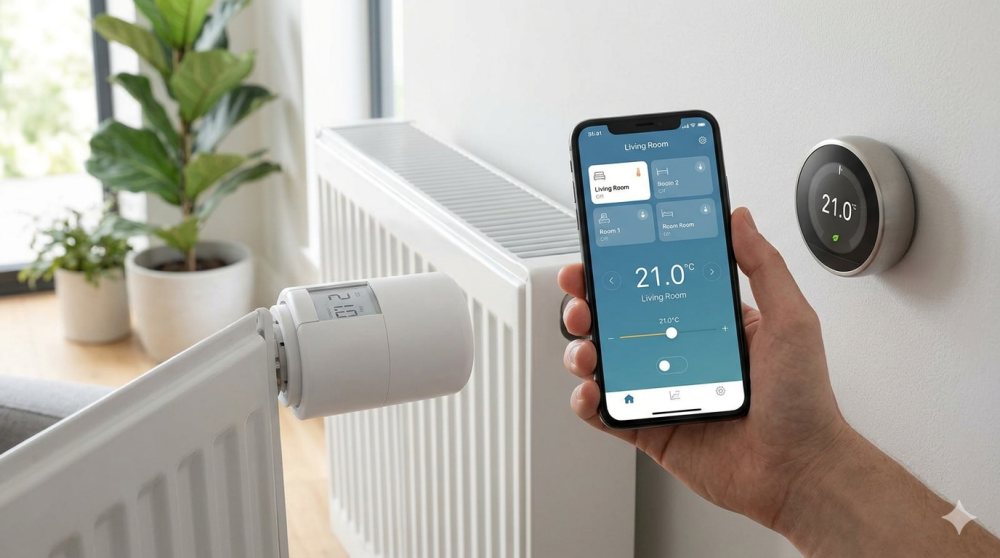
Smart radiator valves and advanced controls build on the functionality of standard TRVs by offering greater flexibility and precision. Smart TRVs offer scheduling and remote control, allowing users to adjust heating settings via apps or connected hubs, and report real-time room temperatures.
Smart thermostatic radiator valves further lower heating bills by integrating occupancy patterns and weather data to optimise performance and avoid unnecessary heating. Although smart TRVs involve a higher upfront cost, they can accelerate payback through improved efficiency, better scheduling, and more responsive control, making them a practical option for those seeking enhanced energy management.
In this context, “smart” refers to a device (TRV) that can automatically adjust or be digitally controlled, rather than being operated manually:
• Smart control features - smart TRVs offer schedule and remote control, and can report room temperatures to apps or hubs
Where to install TRVs
Install TRVs on inlet or outlet pipework where they can sense free ambient air, not behind covers or in enclosed spaces. Care should be taken to avoid fitting TRVs in locations where draughts, direct sunlight, or nearby curtains may distort the valve’s temperature reading and affect performance. It is also important not to install a TRV on the same radiator as the main room thermostat, as this can create a control conflict or “fight” between devices.
Following these guidelines helps ensure accurate temperature regulation, reliable operation, and improved efficiency across the heating system.
• Avoid fitting - TRVs where draughts, direct sunlight, or curtains distort the valve’s temperature reading and affect its performance
Types of TRV heads and sensing mechanisms
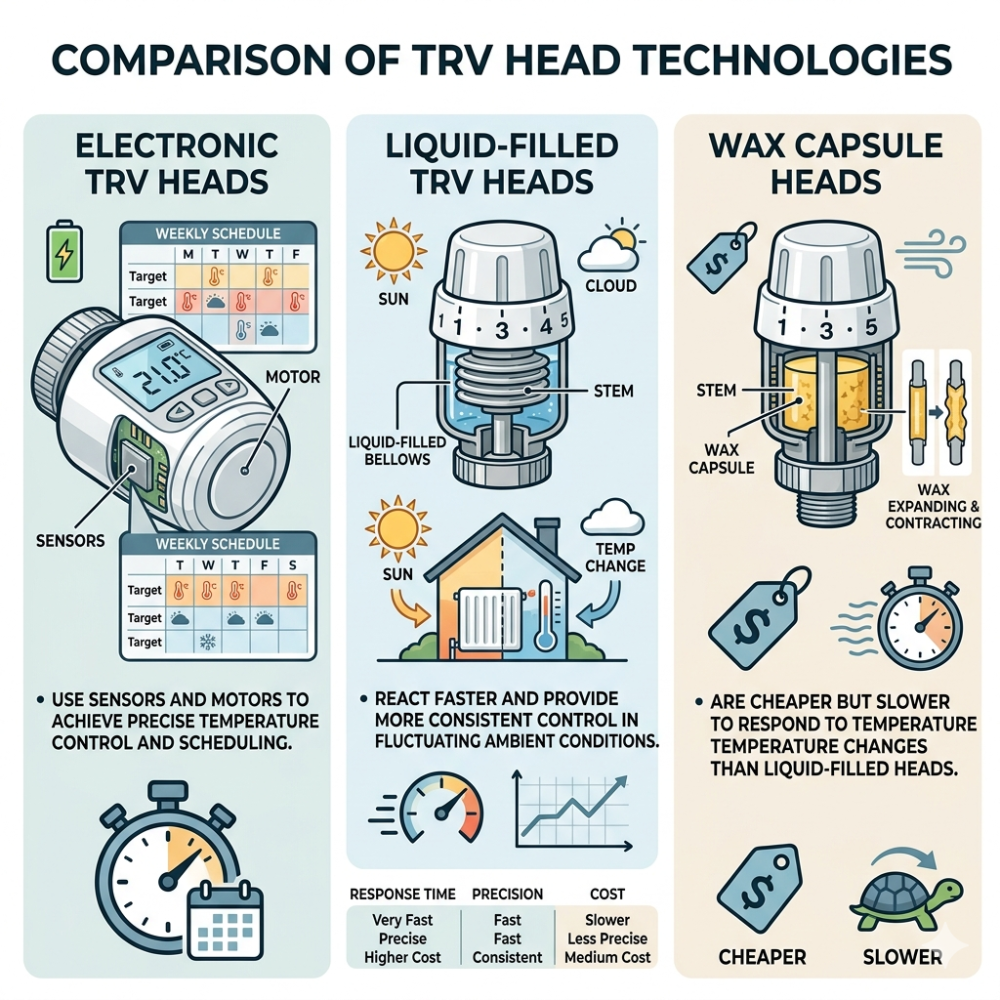
The choice of head affects responsiveness, control accuracy, and overall heating performance within the system:
• Electronic TRV heads - use sensors and motors to achieve precise temperature control and scheduling
• Liquid filled TRV heads - react faster and provide more consistent control in fluctuating ambient conditions
• Wax capsule heads - are cheaper but slower to respond to temperature changes than liquid filled heads
Are thermostatic radiator valves worth the investment?
Yes, TRVs are worth the investment, as they provide quantifiable comfort and measurable energy savings when installed and used correctly. The greatest benefit is achieved when they are combined with proper zoning, meaning different areas or rooms are heated independently based on need rather than as a single uniform space.
A correctly positioned room thermostat ensures accurate system control, while effective insulation, such as geothermal wall, loft, or window insulation, helps retain heat and reduce energy loss. It is also important to consider usage patterns, which refer to how and when rooms are occupied, as this determines how effectively thermostatic radiator valves can reduce unnecessary heating and improve overall efficiency.
In addition to the performance and efficiency issues covered above, it is important to consider practical points when assessing whether TRVs are worth the investment. The potential payback period (PPP) can be favourable, as energy savings accumulate over time and offset the initial costs. However, overall effectiveness depends on system compatibility, particularly in older or poorly balanced heating systems where performance gains may be limited. While generally low maintenance, the best thermostatic radiator valves may require occasional attention over time to ensure reliable operation.
Consider cost, existing controls, and usage patterns when deciding whether to install or upgrade TRV heads.
Related content
Why not also read our Radiator Buying Guide for additional information?
FAQs
In answer to your questions about the best TRV valves, here are some frequently asked questions:1) Will TRVs work with my combi boiler?
Yes, thermostatic radiator valves (TRVs) work perfectly well with combi boilers and are commonly used together in modern heating systems. A combi boiler supplies hot water directly to radiators on demand, and TRVs regulate how much of that hot water enters each radiator based on room temperature. This means the boiler provides the heat, while TRVs control how it is distributed around the home. The fact that you have a combi boiler makes no difference to the efficiency of your TRVs
2) Can I put a TRV on every radiator?
While it might seem logical to fit every radiator with a thermostatic radiator valve, it is not necessary. You should always leave at least one radiator TRV free, especially if it is in the same room as the main thermostat. Regulating the position and regularity of your valves prevents system problems, avoids control conflicts and maintains effective circulation.
3) How do I choose a new TRV head?
Choosing the radiator valve types that best suit your system is not complicated, but checking compatibility is important, as is selecting the right temperature sensor type for your needs (fast or slow response time). Consider the valve position, as bad placement will give you poor temperature readings. Finally, consider the quality of the fit. Always buy the best quality fit you can afford.
Conclusion
Thermostatic radiator valves automatically manage room temperature by regulating hot water flow according to the surroundings. Operating through a reactive element that adjusts with temperature for consistent comfort, it depends on a thermal component that changes size to regulate conditions. TRVs optimise heating by reducing surplus output and supporting zoned temperature control.
Lowering energy consumption, reducing heating bills, and cutting carbon emissions, TRVs are especially effective when combined with good insulation, zoning, and efficient system setup. Smart TRVs remote access, scheduling features and intelligent control through connected systems. Correct installation and placement are important, and overall value depends on system compatibility, usage patterns, and long-term energy savings.
Contact us
Discuss how to save energy through the home’s heating system by using TRVs to provide different temperatures when heating rooms individually instead of across the whole house.
Contact us using the details provided below to discuss the different types of radiator valves:
• Calls - 0121 508 9987
• Email us - onlinestore@plumbingworld.co.uk
• More details – click on our Contact Us Page
• Live Chat – simply click the blue button at the bottom left of any page