
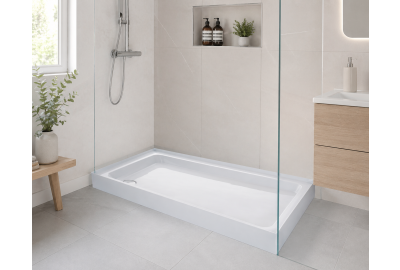
An upstand shower tray is a shower base with raised edges, usually 10-25mm high, built into one or more sides. The upstand feature sits behind the wall tiles or wall panels, creating a barrier that stops water from penetrating the wall structure. If you are asking, “What is an upstand? And what is BS 5385, and is it mandatory for new bathrooms?” The answer is that an upstand shower tray is not legally required, but under BS 5385 best-practice guidance, it is one of the most reliable ways to meet modern waterproofing expectations, especially in high-risk or long-term installations.
What is an upstand shower tray?
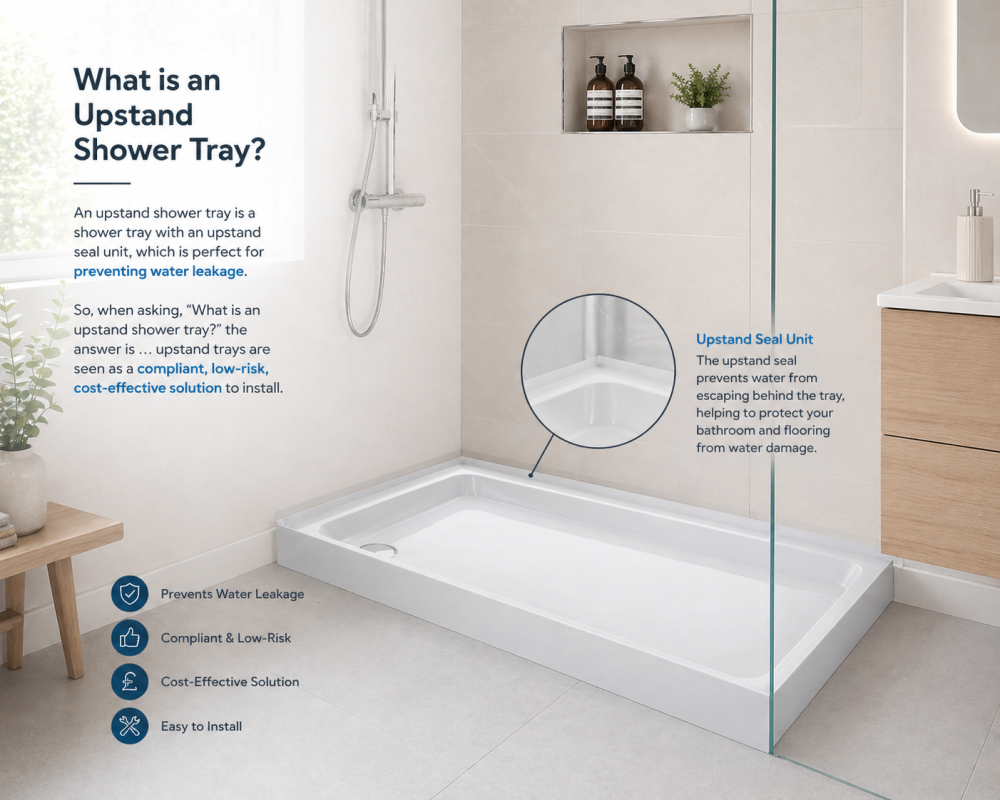
An upstand shower tray is a shower tray with an upstand seal unit, which is perfect for preventing water leakage. So, when asking, “What is an upstand shower tray?” the answer is … upstand trays are seen as a compliant, low-risk, cost-effective solution to install.
When you visit our main shower tray with upstand range, you can view models with criteria like:
• Brands – choose shower trays with upstands available from Coram Showers, Just Trays, MX Elements, with any of the Merlyn upstand shower trays being a recommended product
• Sizes – from 700mm to 900mm, with 760mm x 760mm, 800 x 800mm and 900mm x 900mm being popular options. For example, the MX Elements Square Shower Tray 900mm x 900mm - 4 Upstands
When presented with the evidence, it would be foolhardy not to take advantage of these hard-wearing shower trays that save time and money and, most of all, inconvenience. Be careful with wastes, as some products include it, and some do not. Read the product specification for clarification.
You might ask, "Why does it matter about installing an upstand shower tray”? The answer is a practical one. In a standard flat tray, water relies heavily on sealant (silicone) to stay contained. Over time, sealant can fail. An upstand tray adds a secondary layer of protection, designed to reduce the risk of water leakage. This is especially important in timber floors or upstairs bathrooms.
Explaining BS 5385 and how it links to upstand shower trays
The most up-to-date upstand shower tray design reflects a shift in best practice driven by BS 5385 regulations. The regulations lay down a code of practice for tiling. While the guidance does not specifically say “You must use an upstand tray,” it leans towards it and could be considered best practice, especially in new-build homes.
The guidance expects installers to design out failure points, and upstand shower tray products do that. To go one step further, insurance and warranty providers increasingly expect belt-and-braces waterproofing.
Breaking down the importance of the shower tray upstand seal in relation to BS 5385 comes down to the following points, including mandatory tanking, movement joint integrity, and preventing substrate movement.
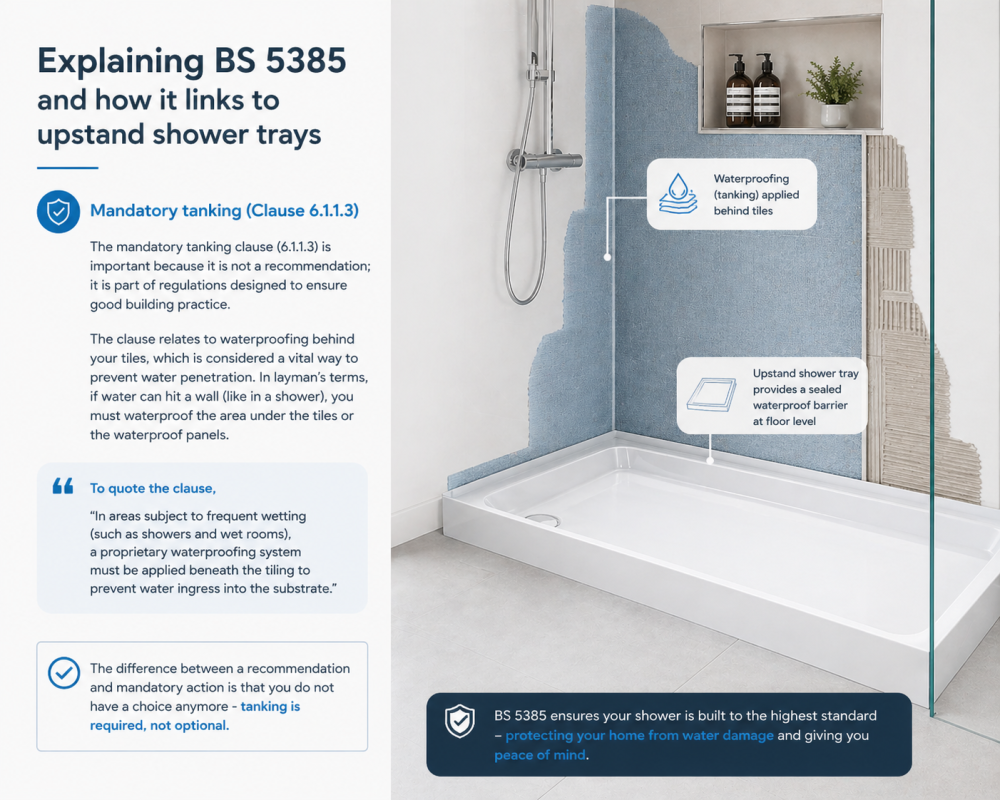
Mandatory tanking (Clause 6.1.1.3)
The mandatory tanking clause (6.1.1.3) is important because it is not a recommendation; it is part of regulations designed to ensure good building practice. The clause relates to waterproofing behind your tiles, which is considered a vital way to prevent water penetration. In layman’s terms, if water can hit a wall (like in a shower), you must waterproof the area under the tiles or the waterproof panels.
To quote the clause, “In areas subject to frequent wetting (such as showers and wet rooms), a proprietary waterproofing system must be applied beneath the tiling to prevent water ingress into the substrate.” The difference between a recommendation and mandatory action is that you do not have a choice anymore - tanking is required, not optional.
Movement joint integrity (BS 5385 Part 4)
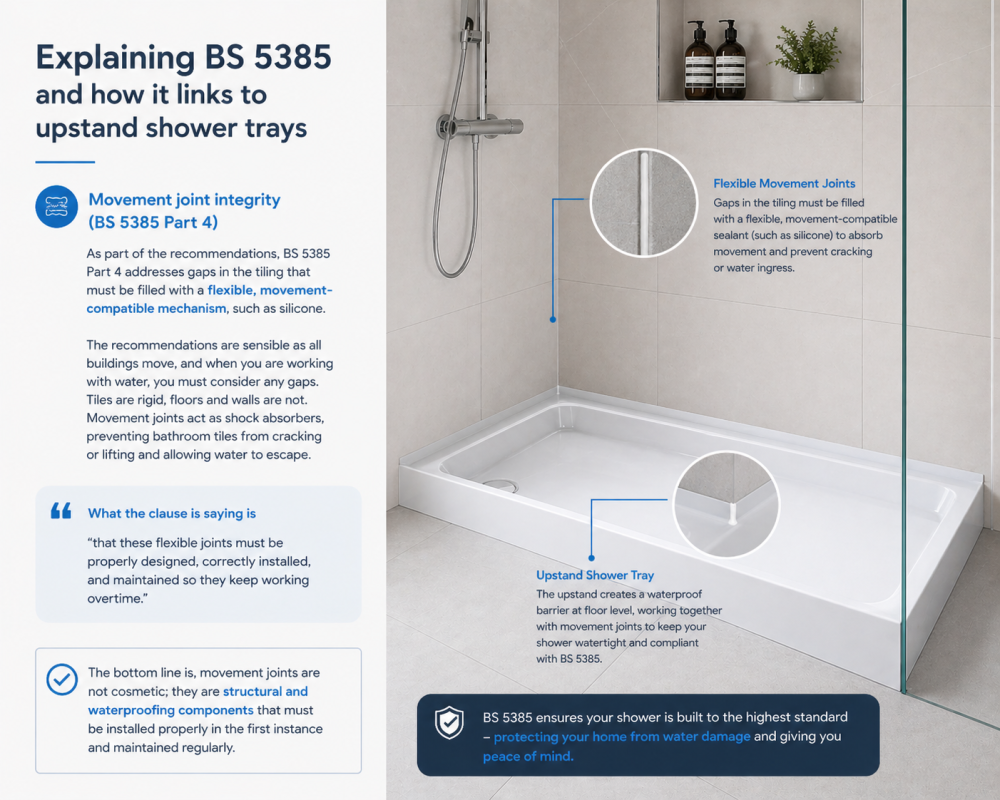
As part of the recommendations, BS 5385 Part 4 addresses gaps in the tiling that must be filled with a flexible, movement-compatible mechanism, such as silicone. The recommendations are sensible as all buildings move, and when you are working with water, you must consider any gaps. Tiles are rigid, floors and walls are not. Movement joints act as shock absorbers, preventing bathroom tiles from cracking or lifting and allowing water to escape.
What the clause is saying is “that these flexible joints must be properly designed, correctly installed, and maintained so they keep working overtime. The bottom line is, movement joints are not cosmetic; they are structural and waterproofing components that must be installed properly in the first instance and maintained regularly.
Preventing substrate movement
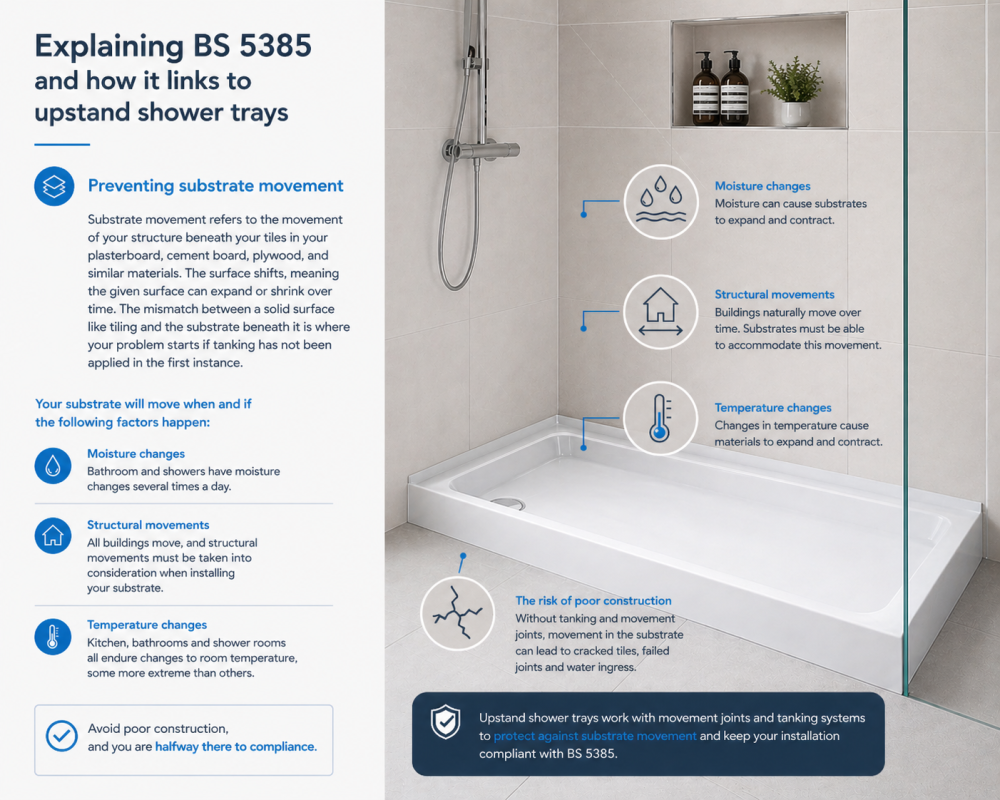
Substrate movement refers to the movement of your structure beneath your tiles in your plasterboard, cement board, plywood, and similar materials. The surface shifts, meaning the given surface can expand or shrink over time. The mismatch between a solid surface like tiling and the substrate beneath it is where your problem starts if tanking has not been applied in the first instance.
Your substrate will move when and if the following factors happen:
• Moisture changes – bathroom and showers have moisture changes several times a day
• Structural movements – all buildings move, and structural movements must be taken into consideration when installing your substrate
• Temperature changes – kitchen, bathrooms and shower rooms all endure changes to room temperature, some more extreme than others
Avoid poor construction, and you are halfway there to compliance.
Important benefits of upstand trays in relation to BS5385
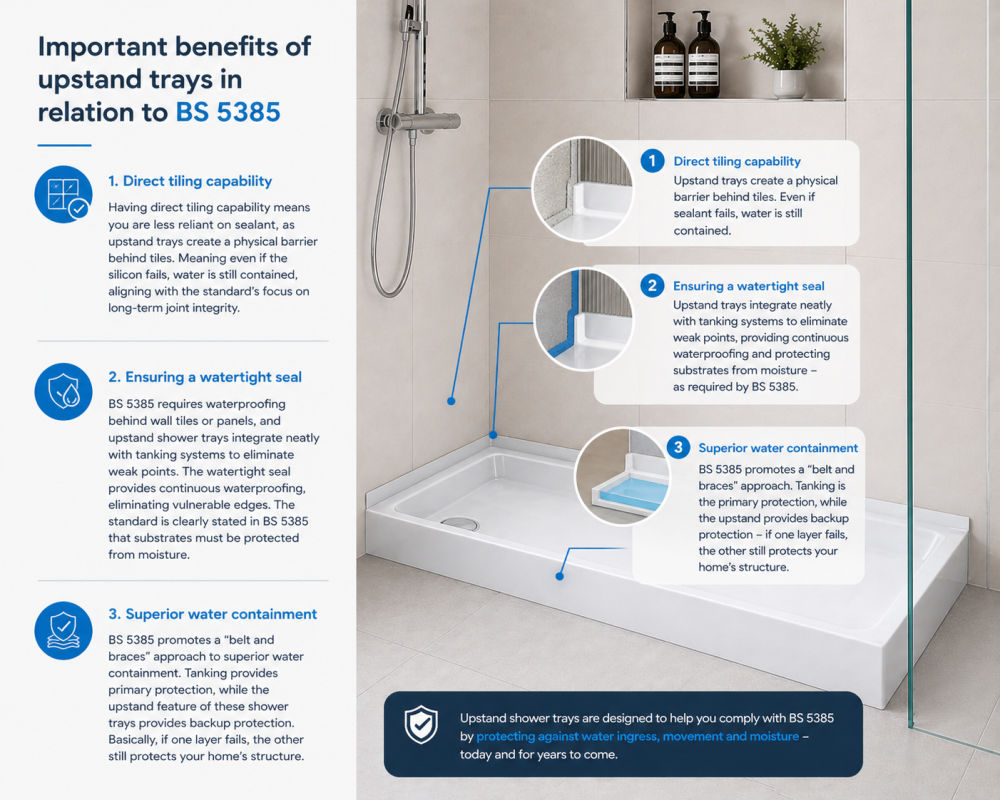
Implementing BS 5385 has many benefits, including increasing your direct tiling capability and taking advantage of a watertight seal, which provides your installation with superior water containment.
Direct tiling capability
Having direct tiling capability means you are less reliant on sealant, as upstand trays create a physical barrier behind tiles. Meaning even if the silicon fails, water is still contained, aligning with the standard’s focus on long-term joint integrity.
Ensuring a watertight seal
BS 5385 requires waterproofing behind wall tiles or panels, and upstand shower trays integrate neatly with tanking systems to eliminate weak points. The watertight seal provides continuous waterproofing, eliminating vulnerable edges. The standard is clearly stated in BS 5385 that substrates must be protected from moisture.Superior water containment
BS 5385 promotes a “belt and braces” approach to superior water containment. Tanking provides primary protection, while the upstand feature of these shower trays provides backup protection. Basically, if one layer fails, the other still protects your home’s structure.
Adding a shower tray upstand seal
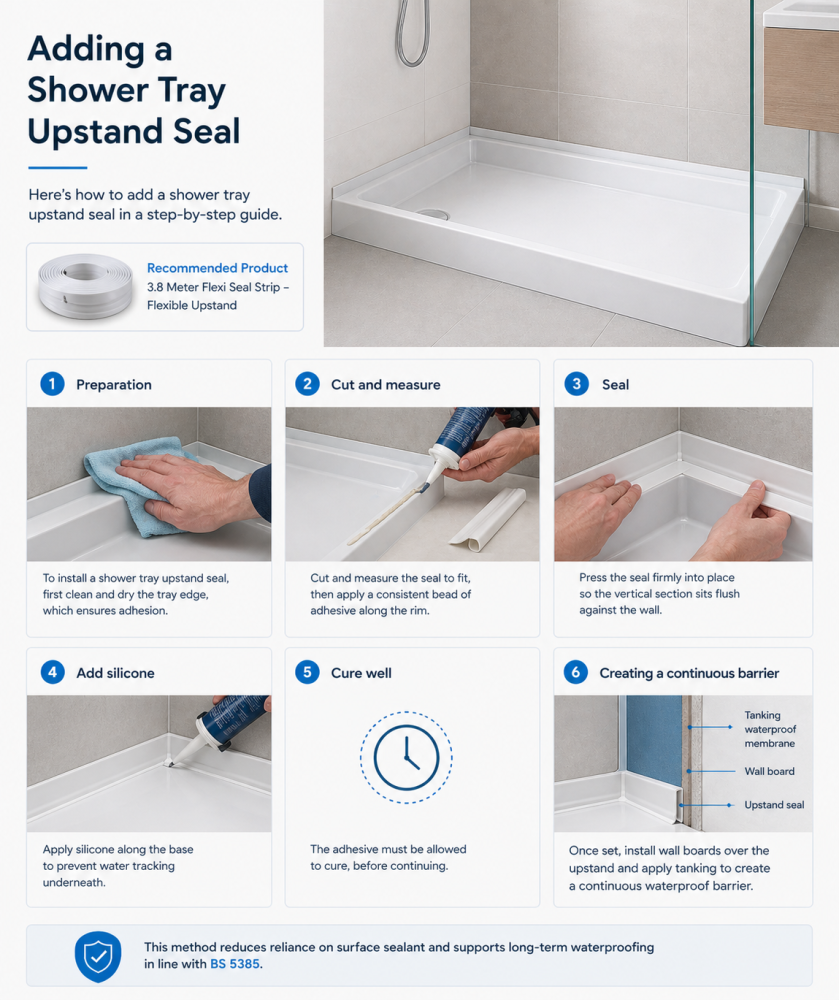
Here is how to add a shower tray upstand seal in a step-by-step guide (choose products like 3.8 Meter Flexi Seal Strip - Flexible Upstand):
• Preparation - to install a shower tray upstand seal, first clean and dry the tray edge, which ensures adhesion
• Cut and measure - the seal to fit, then apply a consistent bead of adhesive along the rim
• Seal - press the seal firmly into place so the vertical section sits flush against the wall
• Add silicone - apply silicone along the base to prevent water tracking underneath
• Cure well – the adhesive must be allowed to cure, before continuing
• Creating a continuous barrier - once set, install wall boards over the upstand and apply tanking to create a continuous waterproof barrier
This method reduces reliance on surface sealant and supports long-term waterproofing in line with BS 5385.
Related articles
The following content may also prove beneficial to read:
• Buying guides – our shower trays buying guide and shower enclosures buying guide
Blogs:
• What are the Different Types of Shower Tray & Which is Best?
• What are the Best Shower Tray Materials in the UK?
• How to Avoid Slipping in the Shower: The Best Anti-slip Shower Trays & Cleaning Ideas
• 16 Shower Tray Ideas to Suit Modern, Compact & Classic Bathrooms
• How to Replace a Shower Tray: Complete Step-by-Step Installation Guide
Conclusion
An upstand shower tray is a shower base manufactured with raised edges, typically 10 to 25 mm in height. They are designed to sit behind tiles or wall panels and prevent water from entering wall structures. It is not legally required, but under BS 5385 guidance, it is considered best practice now in waterproofing. The upstand creates a secondary barrier, reducing reliance on silicone, which gradually degrades.
High-risk areas such as upstairs bathrooms or timber floors, benefit from this. BS 5385 also requires tanking, proper movement joints, and protection against substrate movement. Overall, upstand trays provide a low-risk, cost-effective solution that improves durability, water containment, and long-term installation performance.
Contact us
Our contact information details are provided below:
• Calls - 0121 508 9987
• Email us - onlinestore@plumbingworld.co.uk
• More details – click on our Contact Us Page
• Live Chat – speak to us through text chat message when you click the blue button at the bottom left of any page